

Energy bills in many Asian cities now rival typical American costs, pressuring urban homeowners to find smarter ways to stay comfortable. With tightly packed living spaces and rising temperatures, traditional air conditioning often wastes both power and money. This guide breaks down why split air conditioners offer a stylish, efficient alternative that delivers powerful cooling while targeting lower energy consumption and long-term cost savings.
Table of Contents
- What Are Split Air Conditioners? Explained
- Types of Split ACs for Urban Homes
- How Split ACs Provide Efficient Cooling
- Comparing Split ACs to Other Cooling Options
- Energy Costs, Maintenance, and Common Pitfalls
Key Takeaways
| Point | Details |
|---|---|
| Efficient Cooling | Split air conditioners provide superior energy efficiency and precise temperature control for urban homes. |
| Flexible Installation Options | Various types, including wall-mounted and floor-standing configurations, cater to different living spaces and aesthetic preferences. |
| Regular Maintenance is Crucial | Consistent upkeep is essential to maximize performance and prevent increased energy costs due to neglect. |
| Smart Technology Enhancements | Innovations like inverter technology and targeted zone cooling enhance the efficiency and comfort of split AC systems. |
What Are Split Air Conditioners? Explained
Split air conditioners represent a modern and efficient cooling solution designed specifically for urban homes and apartments where traditional cooling systems might be impractical. These innovative HVAC systems are engineered with two distinct units that work together to provide precise temperature control and superior energy efficiency.
At its core, a split air conditioner consists of two primary components: an indoor unit and an outdoor unit. The indoor unit, typically mounted on a wall or ceiling, contains the evaporator coil and blower fan, while the outdoor unit houses the compressor and condenser coil. These units are strategically connected through refrigerant lines and electrical wiring, enabling a sophisticated cooling process that efficiently removes heat from interior spaces.
The operational mechanism of split air conditioners is remarkably elegant. When activated, the indoor unit draws warm room air and passes it over the chilled evaporator coil, rapidly cooling the air before circulating it back into the living space. Simultaneously, the outdoor unit expels the absorbed heat, creating a continuous cooling cycle. This design offers several significant advantages for urban dwellers:
- Whisper-quiet operation due to the compressor being located outside
- Flexible installation options including wall-mounted, ceiling, and floor configurations
- Superior energy efficiency compared to traditional window units
- Precise temperature and humidity control
- Minimal visual intrusion into living spaces
Pro tip: When selecting a split air conditioner, carefully measure your room dimensions and choose a unit with appropriate BTU capacity to maximize cooling efficiency and minimize energy consumption.
Types of Split ACs for Urban Homes
Urban homeowners have multiple split air conditioning configurations to choose from, each designed to meet specific living space requirements and aesthetic preferences. Understanding these options helps residents select the most suitable cooling solution for their unique home environment.
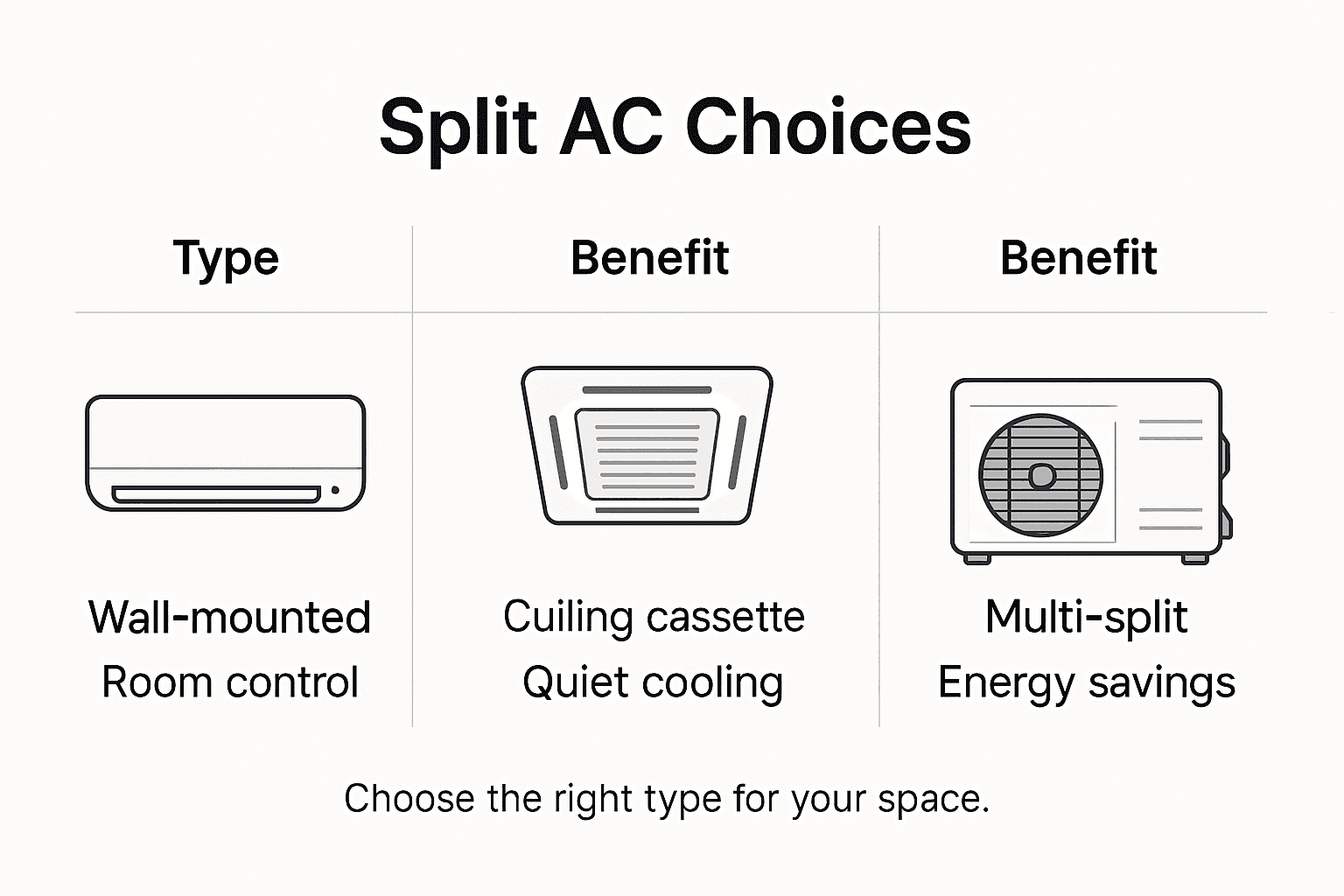
The most common types of split air conditioners for urban homes include wall-mounted units, which are versatile and easily installed in most living spaces. These units provide targeted cooling and are typically the most budget-friendly option. For homes with limited wall space, floor-standing units offer an excellent alternative, positioned near the floor and providing consistent temperature distribution without occupying valuable wall real estate.
More specialized split AC configurations cater to diverse urban living scenarios:
- Single-Zone Systems: Ideal for individual rooms or small apartments
- Multi-Zone Systems: Perfect for larger homes requiring different temperature zones
- Ceiling Cassette Units: Discreet installation that blends seamlessly with interior design
- Ducted Systems: Whole-house cooling with hidden infrastructure
Each configuration offers unique advantages, allowing urban residents to customize their cooling strategy based on room layout, aesthetic preferences, and specific temperature control needs.
Here’s a summary of common split AC types for urban homes and their best use cases:
| AC Type | Ideal Space | Key Benefit |
|---|---|---|
| Wall-Mounted | Bedrooms, living rooms | Easy installation |
| Floor-Standing | Rooms with little wall space | Consistent airflow |
| Ceiling Cassette | Open plan or offices | Discreet appearance |
| Ducted System | Large multi-room homes | Whole-house cooling |
| Single-Zone System | Studio apartments | Targeted cooling |
| Multi-Zone System | Large apartments/houses | Flexible temperature zones |
Pro tip: Measure your room dimensions and ceiling height carefully before selecting a split AC type to ensure optimal fit and maximum cooling efficiency.
How Split ACs Provide Efficient Cooling
Split air conditioners leverage advanced cooling technology to deliver exceptional energy efficiency, making them an ideal solution for urban homes. The sophisticated refrigeration cycle at the heart of these systems transforms heat management into a precise, intelligent process that minimizes energy consumption while maximizing comfort.
The cooling mechanism begins when the indoor unit draws warm room air and passes it over the evaporator coil, which contains a specialized refrigerant. As the refrigerant absorbs heat, it changes from a liquid to a gas, effectively removing thermal energy from the indoor environment. This heated refrigerant is then transported to the outdoor unit, where the condenser coil releases the accumulated heat to the external atmosphere, completing a continuous and efficient heat transfer cycle.
Modern split air conditioning systems incorporate several key technologies that dramatically enhance their cooling efficiency:
- Inverter Technology: Dynamically adjusts compressor speed to match exact cooling requirements
- Targeted Zone Cooling: Allows precise temperature control for individual rooms
- Eliminating Duct Losses: Direct cooling without energy-wasting ductwork
- Variable Speed Compressors: Optimize energy consumption based on real-time cooling demand
- Advanced Refrigerant Management: Improves heat exchange performance
These innovations work together to create a cooling system that responds intelligently to changing environmental conditions, dramatically reducing energy consumption compared to traditional air conditioning methods.
Pro tip: Select a split AC with high SEER ratings and inverter technology to maximize energy savings and ensure optimal cooling performance in urban living spaces.
Comparing Split ACs to Other Cooling Options
Urban homeowners face multiple cooling solutions, but split air conditioners consistently emerge as the most versatile and efficient option. Unlike traditional window units or central air systems, split ACs offer unparalleled flexibility and performance tailored to modern living spaces.
When comparing cooling technologies, split air conditioners demonstrate clear advantages over alternative methods. Window units, for instance, are limited in cooling capacity, create significant noise, and block natural light. Portable air conditioners suffer from lower efficiency and require constant maintenance of condensate trays. Central air systems, while comprehensive, involve extensive ductwork installation and often result in substantial energy losses through inefficient distribution networks.
Key comparative advantages of split air conditioners include:
- Energy Efficiency: Significantly lower electricity consumption compared to window and portable units
- Zonal Control: Ability to cool specific rooms independently
- Quiet Operation: Minimal noise disruption due to compressor placement
- Aesthetic Appeal: Sleek design that integrates seamlessly with interior spaces
- Installation Flexibility: Minimal structural modifications required
- Long-Term Cost Savings: Lower operational expenses over time
The technological sophistication of split air conditioners positions them as the optimal cooling solution for urban residents seeking performance, efficiency, and comfort.
For quick reference, here is a comparison of split ACs versus other cooling solutions:
| System Type | Installation Effort | Room Control | Long-Term Cost |
|---|---|---|---|
| Split AC | Moderate | High | Low maintenance |
| Window Unit | Easy | Low | Higher running costs |
| Portable AC | Very easy | Moveable | Frequent servicing |
| Central Air | Extensive | Limited | High setup/maintenance |
Pro tip: Calculate your total cooling needs and potential energy savings by comparing the SEER ratings of different cooling systems before making a final purchase decision.
Energy Costs, Maintenance, and Common Pitfalls
Split air conditioning systems represent a significant investment, with initial installation costs ranging from $3,000 to $8,000. While these upfront expenses might seem substantial, the long-term energy savings and performance benefits can offset the initial outlay for urban homeowners seeking efficient cooling solutions.
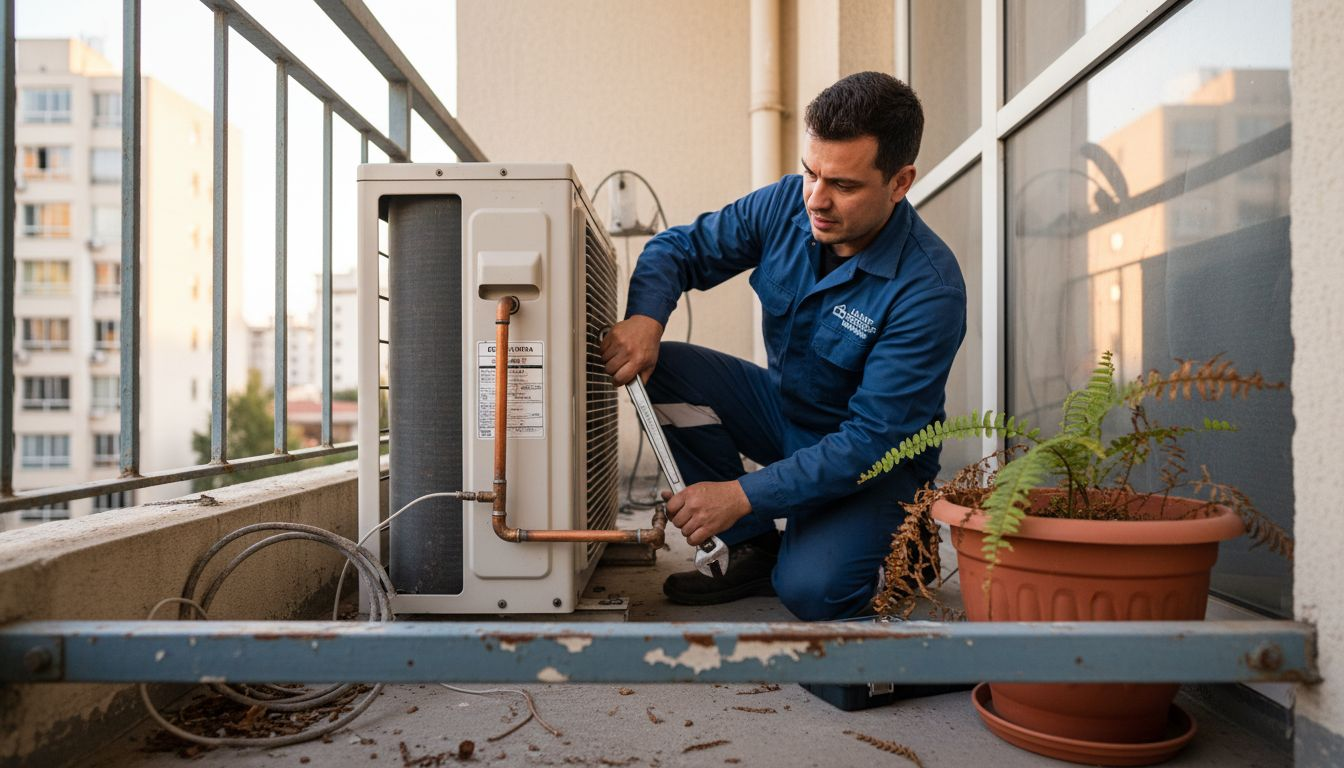
The key to maximizing your split AC’s performance and minimizing energy costs lies in rigorous and consistent maintenance. Regular servicing involves critical tasks such as cleaning air filters every two weeks, ensuring clear condensate drainage, and scheduling annual professional inspections. Neglecting these maintenance procedures can lead to decreased efficiency, higher energy consumption, and potential system failure.
Common pitfalls that urban homeowners should be aware of include:
- Incorrect System Sizing: Choosing an AC unit too large or small for the space
- Poor Installation: Improper setup can void warranties and reduce efficiency
- Neglected Filter Maintenance: Dirty filters increase energy consumption by 15-20%
- Ignoring Refrigerant Levels: Low refrigerant impacts cooling performance
- Skipping Professional Servicing: Annual check-ups prevent major system failures
- Blocked Air Circulation: Furniture or curtains obstructing unit airflow
By understanding these potential challenges, homeowners can take proactive steps to ensure optimal performance and energy efficiency of their split air conditioning systems.
Pro tip: Keep a maintenance log and set calendar reminders for filter cleaning and professional servicing to prevent unexpected breakdowns and maintain peak system performance.
Cut Your Energy Bills with Smart Cooling Solutions for Your Urban Home
Enjoy the benefits of efficient and whisper-quiet split air conditioners that perfectly match the needs of city living. From inverter technology to precise zonal control, these systems address the challenges of rising energy costs and space limitations in urban apartments. Discover how your choice of the right split AC type can lead to significant savings and improved comfort.

Ready to take control over your home cooling and reduce your monthly expenses? Browse our selection of Home and Kitchen products tailored to help you create an energy-smart lifestyle. Visit https://myzabka.com now and find the perfect split air conditioning solution that meets your space and budget requirements. Act today to enjoy cooler, quieter, and more energy-efficient living spaces tomorrow.
Frequently Asked Questions
How do split air conditioners save energy?
Split air conditioners utilize advanced technologies such as inverter compressors, targeted zone cooling, and variable speed operation to minimize energy consumption while maximizing cooling efficiency. This leads to lower electricity bills compared to traditional cooling systems.
What maintenance is required for split air conditioners to maintain energy efficiency?
Regular maintenance for split air conditioners includes cleaning or replacing air filters, ensuring proper drainage of condensate, and scheduling annual professional inspections. These tasks help maintain optimal performance and efficiency, reducing long-term energy costs.
How do split ACs compare to window units in terms of energy efficiency?
Split ACs are significantly more energy-efficient than window units because they provide zonal control, operate quietly, and eliminate energy losses associated with ductwork. They also use advanced refrigerant management to optimize cooling, further lowering energy bills.
What common pitfalls should I avoid with split air conditioners to save on energy costs?
Common pitfalls include choosing an incorrectly sized unit, neglecting filter maintenance, and skipping professional servicing. These issues can lead to increased energy consumption and decreased system efficiency, negating the energy-saving benefits of a split AC.