

Choosing an energy-efficient kitchen appliance can trim electricity costs and lighten your home’s carbon footprint. For eco-conscious homeowners in cities throughout Asia, inverter fridges are changing the game with technology inspired by American innovation. These advanced models use up to 40% less electricity than traditional refrigerators, offering a smarter way to store food while supporting environmental responsibility. Learn what sets inverter fridges apart and see how they can help modern families save money and energy.
Table of Contents
- What Is an Inverter Fridge and How It Works
- Types and Features of Inverter Refrigerators
- How Inverter Fridges Save Energy and Costs
- Environmental Impact and Sustainability Benefits
- Comparing Inverter Fridges to Conventional Models
Key Takeaways
| Point | Details |
|---|---|
| Energy Efficiency | Inverter fridges can reduce energy consumption by up to 40% compared to traditional models, leading to significant savings on electricity bills. |
| Temperature Control | They maintain a consistent internal temperature with minimal fluctuations, enhancing food preservation. |
| Longer Lifespan | The advanced compressor technology reduces mechanical wear, potentially extending the operational life of the appliance. |
| Environmental Benefits | Inverter refrigerators utilize eco-friendly refrigerants, which contribute to a lower carbon footprint and reduced greenhouse gas emissions. |
What Is an Inverter Fridge and How It Works
An inverter fridge represents a significant technological leap in home refrigeration, designed to deliver superior energy efficiency compared to traditional refrigerators. Unlike standard models that switch compressors fully on and off, inverter fridges operate with variable speed compressors that adjust their cooling power dynamically based on internal temperature requirements.
The core innovation lies in the compressor technology. Traditional refrigerators use fixed-speed compressors that work like an on/off switch - running at full power until the desired temperature is reached, then shutting down completely. This start/stop cycle consumes substantial electricity and creates temperature fluctuations. Inverter fridges, by contrast, utilize advanced compressors that can ramp up or down smoothly, maintaining a more consistent internal temperature while consuming significantly less energy.
How does this work in practice? The inverter compressor uses electromagnetic sensors to continuously monitor internal refrigerator conditions. When slight temperature variations are detected, the compressor adjusts its speed incrementally rather than switching completely on or off. This means the fridge can run at lower, more efficient power levels for extended periods, reducing energy consumption by up to 40% compared to conventional models. For Asian urban homeowners concerned about electricity bills, this translates into meaningful monthly savings and reduced environmental impact.
To clarify the technological differences and user benefits, here’s a quick summary of inverter versus traditional fridge operation:
| Aspect | Traditional Fridge | Inverter Fridge |
|---|---|---|
| Compressor Cycle | Fully on or off | Variable speeds |
| Temperature Stability | Large fluctuations | Steady, minimal variation |
| Energy Consumption | Higher, spikes | Lower, sustained |
| Service Life | Shorter due to wear | Longer due to less stress |
Pro Tip - Smart Shopping: Before purchasing an inverter fridge, request a detailed energy consumption comparison chart from the seller to understand potential long term savings and verify the manufacturer’s efficiency claims.
Key Advantages of Inverter Fridges:
- Consistent internal temperature
- Significantly lower energy consumption
- Reduced mechanical wear on components
- Quieter operation
- Faster cooling capabilities
Types and Features of Inverter Refrigerators
Inverter refrigerators come in multiple configurations designed to meet diverse household needs, ranging from compact single-door models to expansive multi-door systems with sophisticated cooling technologies. The primary categories include French door, side-by-side, bottom-freezer, and top-freezer inverter refrigerators, each offering unique space management and energy efficiency characteristics tailored for different living spaces.
French door inverter refrigerators represent a premium segment, featuring wide shelving, multiple compartments, and advanced temperature control zones. These models typically include separate cooling systems for fresh food and freezer sections, enabling independent temperature management and reducing energy consumption. Side-by-side inverter models provide generous storage with vertical compartments, ideal for urban apartments with limited kitchen space. Bottom-freezer designs prioritize easy access to fresh food compartments, placing frequently used sections at eye level while maintaining consistent cooling performance.
Beyond configuration variations, modern inverter refrigerators integrate smart technologies that enhance user experience and energy efficiency. Advanced models now include features like precise temperature sensors, humidity control mechanisms, and intelligent defrost systems. Some high-end inverter fridges incorporate WiFi connectivity, allowing remote temperature monitoring and diagnostic capabilities through smartphone applications. These intelligent features not only improve food preservation but also provide granular control over energy consumption, making them particularly attractive for environmentally conscious urban households.
Advanced Inverter Refrigerator Features:
Here’s a reference for key smart features commonly found in modern inverter fridges:
| Smart Feature | Purpose | Practical Benefit |
|---|---|---|
| WiFi Monitoring | Remote temperature check | Food safety alerts |
| Adaptive Defrost | Prevents ice buildup | Lower maintenance effort |
| Energy Tracking | Monitors power use | Helps reduce bills |
| Humidity Sensors | Keeps produce fresh | Reduces food waste |
- Smart temperature zone management
- Precise humidity control
- WiFi connectivity and smartphone integration
- Multiple cooling systems
- Energy consumption tracking
- Adaptive defrost technology
- Noise reduction mechanisms
Pro Tip - Tech-Savvy Selection: When comparing inverter refrigerator models, prioritize units with comprehensive energy efficiency ratings and smart monitoring capabilities to maximize long-term cost savings and performance.
Refrigerator Type Comparison:
| Type | Best For | Storage Efficiency | Energy Rating |
|---|---|---|---|
| French Door | Large Families | High | Excellent |
| Side-by-Side | Compact Spaces | Medium | Very Good |
| Bottom Freezer | Easy Access | Good | Good |
| Top Freezer | Budget Conscious | Standard | Standard |
How Inverter Fridges Save Energy and Costs
Inverter refrigerators represent a revolutionary approach to household energy conservation, offering substantial cost savings through advanced technological improvements in compressor efficiency. By utilizing variable-speed compressor technology, these innovative appliances can dramatically reduce electricity consumption compared to traditional fixed-speed refrigerators, making them an intelligent investment for budget-conscious and environmentally aware homeowners.

The energy-saving mechanism of inverter fridges is rooted in their ability to modulate cooling power precisely. Traditional refrigerators operate using an all-or-nothing approach, consuming full power during cooling cycles and then completely shutting down. In contrast, inverter models dynamically adjust compressor speed, maintaining consistent internal temperatures while consuming significantly less electricity. Scientific research indicates that this intelligent cooling strategy can lower energy consumption by up to 30 percent, translating into meaningful reductions in monthly electricity bills.
Beyond direct energy savings, inverter refrigerators offer additional financial benefits through reduced mechanical wear and longer appliance lifespans. The smooth, continuous operation of variable-speed compressors generates less mechanical stress compared to traditional start-stop mechanisms. This gentler performance not only consumes less energy but also minimizes component degradation, potentially extending the refrigerator’s functional life and reducing long-term maintenance and replacement expenses.
Key Energy Savings Breakdown:
- Up to 30% lower electricity consumption
- Reduced mechanical stress on components
- Consistent internal temperature maintenance
- Lower carbon footprint
- Potential extended appliance lifespan
Estimated Annual Cost Comparison:
| Refrigerator Type | Annual Energy Cost | Potential Savings |
|---|---|---|
| Traditional Fridge | $120-$180 | Base |
| Inverter Fridge | $80-$120 | $40-$60 |
Pro Tip - Smart Consumption: Monitor your inverter refrigerator’s energy performance using built-in smart features or external energy tracking devices to maximize efficiency and identify potential optimization opportunities.
Factors Influencing Inverter Fridge Energy Efficiency:
- Ambient room temperature
- Frequency of door openings
- Internal food volume
- Temperature setting preferences
- Age and maintenance of the appliance
Environmental Impact and Sustainability Benefits
Inverter refrigerators represent a critical advancement in sustainable home technology, offering significant environmental benefits through innovative approaches to reducing global warming potential. By integrating advanced compressor technologies and utilizing eco-friendly refrigerants, these appliances play a pivotal role in minimizing household carbon footprints and supporting broader climate conservation efforts.
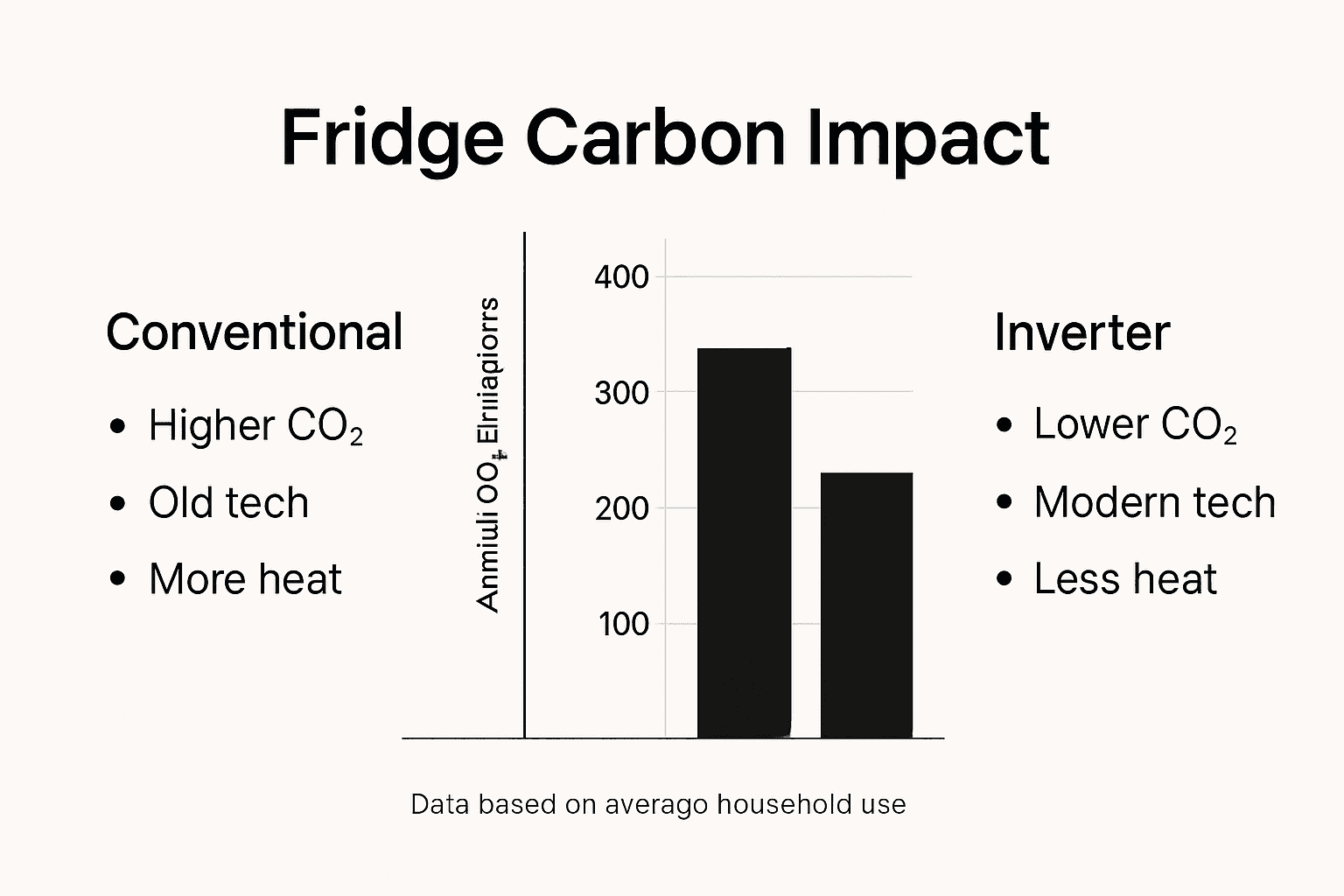
The environmental sustainability of inverter fridges extends beyond energy efficiency. Modern models incorporate low global warming potential (GWP) refrigerants that dramatically reduce greenhouse gas emissions compared to traditional refrigeration systems. These technological innovations address two critical environmental challenges: reducing electricity consumption and minimizing the potential for harmful refrigerant leakage. The cumulative impact is substantial, with each inverter refrigerator potentially preventing hundreds of kilograms of carbon dioxide emissions annually compared to older, less efficient models.
Beyond direct emissions reduction, inverter refrigerators contribute to environmental sustainability through extended product lifecycles and reduced manufacturing demands. The advanced compressor technologies result in less mechanical stress, which translates to longer appliance lifespans and reduced electronic waste. This approach aligns with circular economy principles, where product durability and energy efficiency are prioritized over frequent replacements. For environmentally conscious consumers, this means making a meaningful contribution to resource conservation and reduced industrial manufacturing impact.
Environmental Impact Highlights:
- Reduced greenhouse gas emissions
- Lower electricity consumption
- Extended appliance lifespan
- Minimal electronic waste generation
- Support for circular economy principles
Carbon Emission Comparison:
| Refrigerator Type | Annual CO2 Emissions | Environmental Impact |
|---|---|---|
| Traditional Fridge | 250-350 kg | High |
| Inverter Fridge | 100-200 kg | Low |
Pro Tip - Green Consumer Strategy: When purchasing an inverter refrigerator, prioritize models with certified low GWP refrigerants and comprehensive energy efficiency ratings to maximize your positive environmental contribution.
Additional Sustainability Factors:
- Use of recyclable materials
- Energy Star certification
- Manufacturer’s environmental commitment
- Refrigerant recovery potential
- Manufacturing process sustainability
Comparing Inverter Fridges to Conventional Models
Inverter refrigerators represent a transformative leap in cooling technology, fundamentally different from traditional models in their approach to energy consumption and temperature management. While conventional refrigerators operate using a simple on-off mechanism, inverter models utilize advanced compressor technologies that dynamically adjust cooling power, resulting in more precise temperature control and significantly improved energy efficiency.
The core distinction between inverter and conventional refrigerators lies in their compressor functionality. Traditional models use fixed-speed compressors that completely switch on and off, creating temperature fluctuations and consuming substantial electricity during startup cycles. Inverter compressors, by contrast, operate continuously at variable speeds, making micro-adjustments that maintain consistent internal temperatures with minimal energy expenditure. This fundamental technological difference translates into tangible benefits: lower electricity consumption, reduced mechanical wear, and more stable food preservation environments.
Performance metrics clearly demonstrate the advantages of inverter refrigeration. Comparative studies reveal that inverter models can reduce energy consumption by up to 40% compared to conventional refrigerators. The sophisticated sensors and adaptive cooling mechanisms enable these appliances to respond more efficiently to environmental changes, internal temperature variations, and usage patterns. For urban households concerned about electricity costs and environmental impact, this represents a significant improvement over traditional cooling technologies.
Key Performance Comparison:
- Energy Efficiency
- Temperature Stability
- Noise Levels
- Mechanical Durability
- Long-term Operational Costs
Detailed Comparative Analysis:
| Performance Metric | Conventional Fridge | Inverter Fridge |
|---|---|---|
| Annual Energy Cost | $180-$220 | $100-$150 |
| Temperature Variation | ±3-4°F | ±0.5-1°F |
| Compressor Lifecycle | 5-7 years | 10-15 years |
| Noise Level | 40-50 decibels | 35-45 decibels |
Pro Tip - Smart Selection: When comparing refrigerator models, request comprehensive energy performance data and calculate potential long-term savings, not just upfront purchase price.
Additional Comparative Factors:
- Initial purchase cost
- Maintenance requirements
- Environmental impact
- Technological complexity
- Warranty coverage
Discover How an Inverter Fridge Can Transform Your Home
If you are tired of high electric bills and want a sustainable solution that keeps your food fresher longer an inverter fridge is the perfect choice. Many homeowners face the challenge of balancing energy savings with reliable cooling performance. With concepts like variable-speed compressors and smart energy tracking now at your fingertips you can enjoy consistent temperature control and reduce your carbon footprint dramatically.

Explore top-quality home appliances at MyZabka where energy efficiency meets innovation. Don’t wait to upgrade your kitchen with the latest inverter refrigerators that offer quieter operation faster cooling and lower energy costs. Visit MyZabka now to learn more and choose the ideal inverter fridge tailored to your lifestyle. Make the smart move today and start saving on your monthly electricity bills while caring for the environment.
Frequently Asked Questions
What is an inverter fridge?
An inverter fridge is a type of refrigerator that uses a variable speed compressor to adjust cooling power dynamically, leading to lower energy consumption compared to traditional models with fixed-speed compressors.
How do inverter refrigerators save energy and reduce bills?
Inverter refrigerators maintain a consistent internal temperature by adjusting the compressor speed rather than turning it completely on and off. This approach can reduce energy consumption by up to 40%, leading to lower electricity bills.
What are the advantages of using an inverter fridge over a conventional refrigerator?
Inverter fridges offer consistent temperature management, significantly lower energy consumption, reduced mechanical wear, quieter operation, and potentially longer lifespans, making them more efficient and durable than traditional refrigerators.
Can inverter refrigerators really have an impact on the environment?
Yes, inverter refrigerators use eco-friendly refrigerants and advanced compressor technologies that reduce greenhouse gas emissions and electricity consumption, significantly diminishing their environmental impact and supporting sustainability efforts.
Recommended
- Home Essentials – Myzabka
- Home Essentials – Myzabka
- Myzabka
- Home Cleaning – Myzabka
- Choose Ductless AC for Efficient Comfort in Greenville, SC » MD Heating & Air Conditioning
- The Essential Guide to Saving Energy at Home - Projector Display
- How Purifiers Save Cost for Homes and Businesses - Coway Water Purifier