

Most urban homeowners in South Asia know the struggle of chipping away stubborn ice in cramped kitchens while envious of how smoothly an American appliance handles food storage. The hassle of manual defrosting not only wastes your valuable time but also uses more energy than you might expect. Discover how auto-defrost fridges can cut electricity costs by up to 25 percent, help maintain food freshness, and bring effortless convenience to your daily kitchen routine.
Table of Contents
- Auto-defrost Fridges Defined And Debunked
- How Auto-defrost Mechanisms Operate Efficiently
- Key Types: Frost-free Versus Manual Systems
- Energy Savings And Food Preservation Benefits
- Upfront Investment, Maintenance, And Costs
- Manual Defrosting Versus Automatic Solutions
Key Takeaways
| Point | Details |
|---|---|
| Auto-defrost Technology | Auto-defrost refrigerators use advanced systems to eliminate frost buildup, enhancing cooling efficiency without manual intervention. |
| Energy Efficiency | These fridges optimize energy use by maintaining stable temperatures and minimizing unnecessary frost, leading to significant electricity savings. |
| Maintenance Requirements | Auto-defrost systems require less maintenance than manual defrost models, reducing time spent on upkeep and minimizing repair costs. |
| Long-term Investment | Although they have a higher upfront cost, auto-defrost refrigerators provide long-term savings through lower energy bills and extended food preservation capabilities. |
Auto-defrost fridges defined and debunked
Modern urban kitchens have transformed dramatically with the introduction of auto-defrost refrigerators, technology that solves a persistent household challenge: preventing frost buildup. These advanced cooling systems automatically manage internal temperature and moisture levels, eliminating the tedious manual defrosting process that once consumed homeowners’ time.
At its core, an auto-defrost refrigerator operates through a sophisticated mechanism. The system periodically raises the temperature around the evaporator coils, causing any accumulated frost to melt. Water from this melting process is then channeled through a drain tube into a collection pan, where it evaporates. This intelligent design prevents ice accumulation while maintaining consistent cooling performance.
Contrary to common misconceptions, auto-defrost fridges are not energy inefficient. In fact, they optimize energy consumption by:
- Maintaining consistent internal temperatures
- Preventing excessive frost that makes cooling systems work harder
- Reducing manual intervention and maintenance time
The technology represents a significant leap forward in home appliance design, addressing multiple consumer needs simultaneously. Modern urban dwellers appreciate solutions that save time, reduce manual labor, and provide reliable performance.
Pro Kitchen Efficiency Tip: Always keep your auto-defrost fridge’s drainage system clean and unobstructed to ensure optimal performance and prevent potential water leakage issues.
How auto-defrost mechanisms operate efficiently
Auto-defrost refrigeration represents a sophisticated engineering solution designed to maintain optimal cooling performance through intelligent thermal management. The mechanism works through a carefully synchronized process of temperature manipulation and moisture control that prevents ice accumulation while preserving food quality.
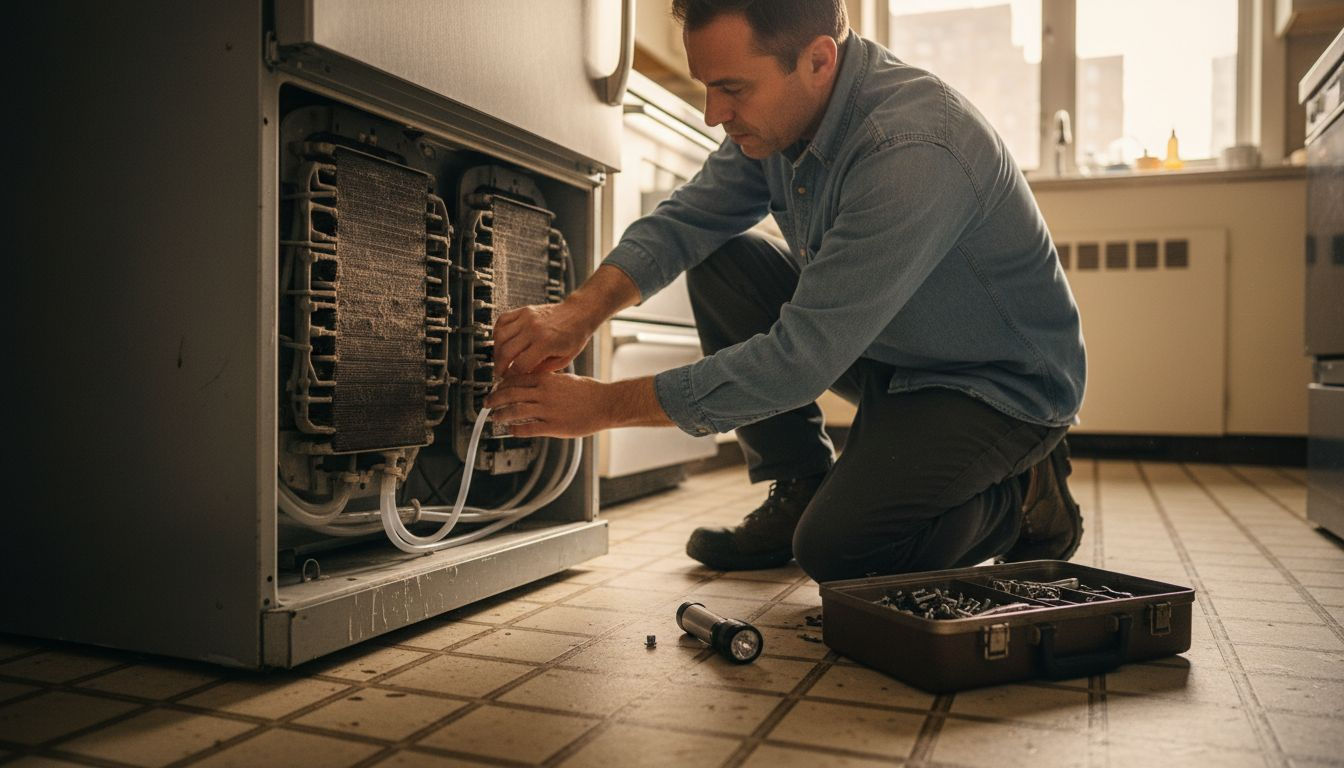
The core of the auto-defrost system involves a precise heating cycle integrated within the refrigerator’s cooling mechanism. During normal operation, refrigerators maintain temperatures around 0 degrees Fahrenheit. Periodically—typically every 6 to 12 hours—the system initiates a brief defrost cycle where heating elements warm the evaporator coils just enough to melt any accumulated frost without significantly raising the internal temperature of stored food.
This automated process offers multiple advantages for urban homeowners:
- Eliminates manual defrosting requirements
- Maintains consistent cooling performance
- Prevents potential food spoilage from excessive frost buildup
- Reduces overall energy consumption by keeping cooling systems efficient
Modern auto-defrost technologies have become increasingly sophisticated, incorporating sensors that detect precise frost levels and adjust defrosting cycles accordingly. These smart systems can differentiate between minor and significant frost accumulation, ensuring optimal energy usage and preventing unnecessary heating cycles.
Pro Cooling Maintenance Tip: Periodically check your refrigerator’s drainage system to ensure condensation from defrost cycles flows smoothly, preventing potential water buildup or potential appliance damage.
Key types: frost-free versus manual systems
Refrigeration technologies have evolved dramatically, presenting urban homeowners with two distinct approaches to managing interior moisture and temperature: frost-free and manual defrosting systems. Comprehensive technical reviews reveal significant operational differences that impact convenience, energy efficiency, and long-term appliance performance.
Manual defrost refrigerators require periodic human intervention to remove accumulated ice. Owners must physically unplug the unit, remove food items, and manually chip away frost buildup. These traditional models typically cost less upfront but demand substantial time and effort. They work best in environments with low humidity and for households willing to invest regular maintenance time.
Frost-free systems represent technological advancement, offering several key advantages:
- Automatic frost removal cycles
- Consistent internal temperatures
- Reduced manual maintenance requirements
- More uniform cooling distribution
- Extended food preservation capabilities
The primary distinction lies in technological complexity. Manual systems rely on simple cooling principles, while frost-free refrigerators incorporate sophisticated sensors and heating elements that actively manage internal moisture. These intelligent mechanisms periodically raise temperatures around evaporator coils, melting potential frost before it can significantly accumulate, thus maintaining optimal cooling performance without user intervention.
Pro Selection Strategy: Consider your lifestyle, available time for maintenance, and local humidity levels when choosing between manual and frost-free refrigeration systems to ensure the best match for your specific household needs.
Energy savings and food preservation benefits
Modern refrigeration technology represents a remarkable intersection of energy efficiency and food preservation, with auto-defrost systems leading the innovation. Advanced research demonstrates that optimized defrost mechanisms can dramatically reduce energy consumption while maintaining superior food storage conditions for urban households.
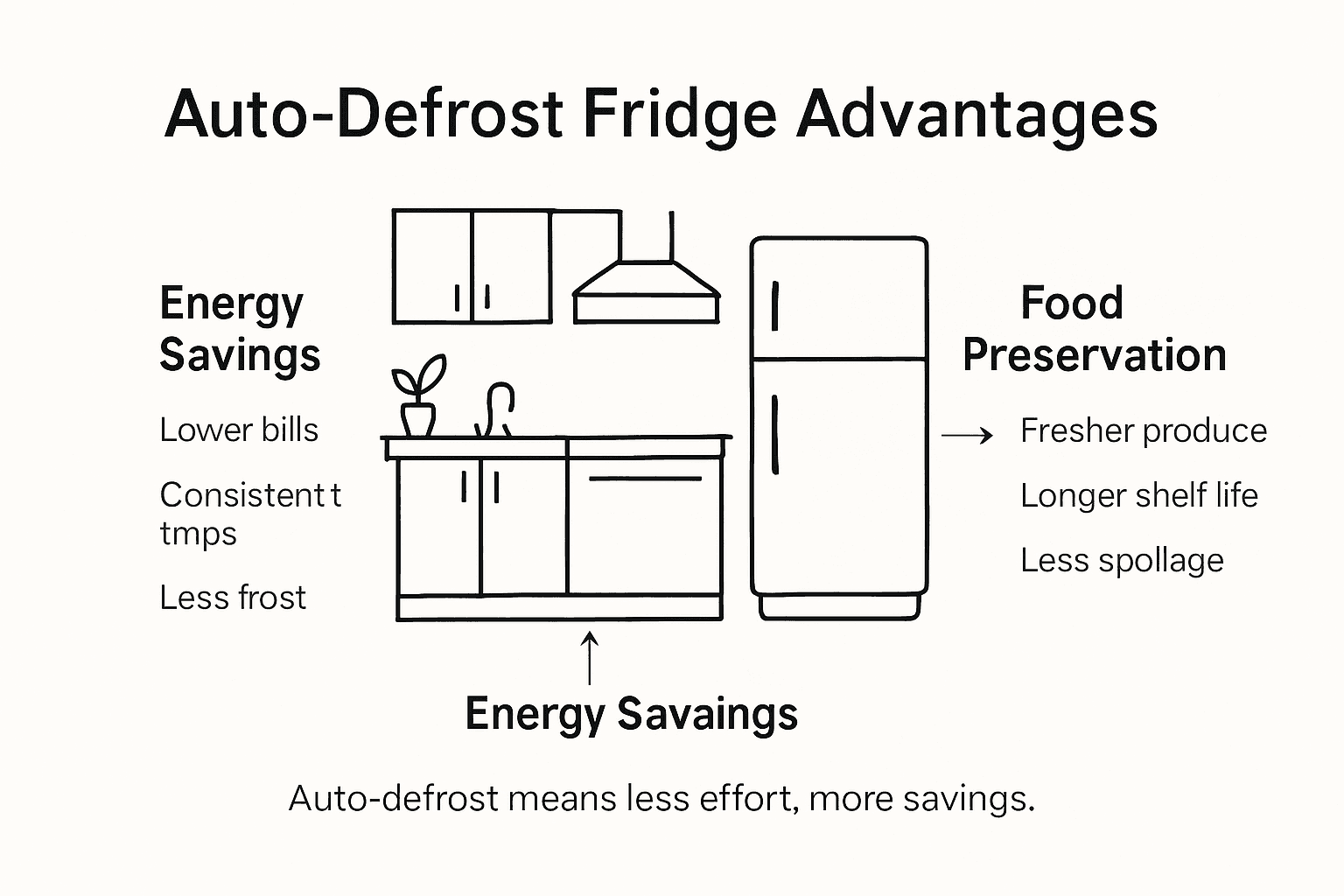
The energy savings potential of auto-defrost refrigerators stems from their intelligent design. Unlike traditional models that continuously operate at fixed temperatures, these systems use sophisticated sensors to adjust cooling cycles. Predictive algorithms and machine learning technologies enable precise temperature and moisture management, resulting in significant power conservation.
Key benefits of advanced refrigeration technologies include:
- Reduced electricity consumption by 15-25%
- More stable internal temperature environments
- Extended food freshness periods
- Minimized cold chain disruptions
- Intelligent energy management
Food preservation becomes dramatically more effective with these smart systems. By maintaining consistent temperatures and preventing frost buildup, auto-defrost refrigerators create optimal storage conditions that slow bacterial growth and preserve nutritional quality. The precision of modern cooling technologies means less food waste and more consistent storage conditions across different compartments.
Below is a quick reference for major benefits of advanced auto-defrost refrigerators:
| Benefit | Business Impact | User Impact |
|---|---|---|
| Intelligent temperature control | Reduces energy expenses | Improves food freshness |
| Predictive defrosting algorithms | Extends appliance lifespan | Less frequent repairs |
| Optimized moisture management | Minimizes product losses | Decreases food spoilage |
Pro Energy Management Tip: Calibrate your refrigerator’s temperature settings seasonally and ensure proper door sealing to maximize the energy-saving potential of your auto-defrost system.
Upfront investment, maintenance, and costs
Auto-defrost refrigeration represents a significant technological investment for urban homeowners, balancing initial purchase expenses against long-term operational savings. The upfront cost of these advanced systems typically ranges from 20% to 40% higher than traditional manual defrost models, reflecting the sophisticated sensors, heating elements, and intelligent cooling mechanisms integrated into modern appliances.
The financial breakdown of auto-defrost refrigerators involves several key considerations. While the initial purchase price is higher, these systems deliver substantial savings through reduced energy consumption, minimized food waste, and lower maintenance requirements. Households can expect to recoup the additional investment within 3 to 5 years through decreased electricity bills and fewer repair interventions.
Maintenance costs for auto-defrost systems are significantly lower compared to manual refrigerators:
- Reduced professional servicing requirements
- Less frequent component replacements
- Minimal manual intervention needed
- Built-in diagnostic capabilities
- Longer overall appliance lifespan
Urban homeowners should consider multiple financial factors beyond the initial price tag. The intelligent design of auto-defrost refrigerators means fewer unexpected repair costs, more consistent cooling performance, and enhanced food preservation. These systems represent a strategic long-term investment in household efficiency, transforming how modern families manage their kitchen infrastructure.
Pro Budget Strategy: Always compare total cost of ownership, including estimated energy savings and maintenance expenses, rather than focusing solely on the initial purchase price when selecting an auto-defrost refrigerator.
Manual defrosting versus automatic solutions
Refrigeration technologies represent a critical choice for urban households, with manual and automatic defrosting systems offering distinctly different approaches to food preservation. Comprehensive comparisons reveal nuanced operational differences that extend far beyond simple temperature maintenance.
Manual defrost refrigerators require significant personal time investment. Homeowners must periodically unplug the unit, remove all contents, and physically scrape away accumulated ice. These traditional models present unique challenges in high-traffic urban environments, where time and convenience are paramount considerations.
Key comparative factors between manual and automatic defrost systems include:
- Labor requirements
- Energy efficiency
- Initial purchase costs
- Long-term maintenance expenses
- Food preservation effectiveness
- Cooling consistency
Automatic defrost systems represent technological advancement, eliminating the need for manual intervention. These intelligent appliances use integrated sensors to monitor frost accumulation, periodically initiating self-cleaning cycles that prevent ice buildup without human interaction. The precision of these systems ensures more consistent temperatures, better food preservation, and reduced potential for temperature-related spoilage.
Here’s a summary comparing manual and auto-defrost refrigerator systems:
| Aspect | Manual Defrost | Auto-defrost |
|---|---|---|
| User Labor | Requires regular effort | Hands-off operation |
| Cooling Consistency | Temperature fluctuations | Stable temperatures |
| Initial Cost | Lower purchase price | Higher upfront cost |
| Long-term Savings | Fewer energy savings | Greater efficiency, less waste |
| Maintenance Needs | Frequent manual cleaning | Occasional system checks |
Pro Selection Insight: Evaluate your household’s time availability, budget constraints, and lifestyle demands when choosing between manual and automatic defrost refrigeration systems to ensure the most compatible solution.
Discover the Convenience of Auto-Defrost Refrigerators for Your Urban Kitchen
Modern urban homes face the daily challenge of maintaining fresh food without the hassle of manual defrosting. This article highlights key pain points such as time-consuming maintenance, inconsistent cooling, and energy inefficiency tied to traditional refrigeration. If you want to embrace smart solutions like auto-defrost fridges that eliminate frost buildup and preserve food longer with stable temperatures then explore options designed to meet these exact needs.

Upgrade your kitchen today with reliable appliances available at MyZabka. Experience benefits like effortless maintenance, energy savings, and better food preservation by choosing our carefully selected home and kitchen products. Don’t wait to enhance your daily life and save both time and money. Visit MyZabka main site now to find the perfect auto-defrost refrigerator and make a smart investment for your urban home.
Frequently Asked Questions
What is an auto-defrost fridge?
An auto-defrost fridge uses advanced technology to periodically raise the temperature of evaporator coils to melt accumulated frost, which is then drained away, preventing ice buildup and reducing the need for manual defrosting.
How does an auto-defrost fridge save energy?
Auto-defrost fridges maintain consistent internal temperatures, preventing excessive frost that can make cooling systems work harder. They are designed to optimize energy consumption, potentially reducing electricity costs by 15-25%.
What are the benefits of choosing an auto-defrost fridge over a manual defrost model?
Auto-defrost fridges offer several advantages, including automatic frost removal, less manual maintenance, improved cooling consistency, and extended food preservation capabilities, all contributing to a more efficient kitchen experience.
How often do auto-defrost fridges need maintenance?
While auto-defrost fridges require less frequent maintenance than manual models, it’s important to periodically check the drainage system to ensure proper functioning and to keep the appliance operating efficiently.