

Most american homes now rely on smart devices for everyday convenience, yet many tech-savvy homeowners in suburban Asia hesitate due to misconceptions about complexity and cost. Studies reveal that over 60 percent of households see noticeable energy savings within months of installing smart systems. Upgrading your living space does not have to be overwhelming. This guide clears up misunderstandings and offers clear steps for integrating advanced technology that protects your home and lowers utility bills.
Table of Contents
- Smart Home Devices Defined And Misconceptions
- Major Types: Security, Energy, Automation
- Key Features: Connectivity, Intelligence, Compatibility
- Real-World Impact: Safer, Efficient Living
- Risks, Costs, And Privacy Challenges
- Choosing, Integrating, And Avoiding Common Pitfalls
Key Takeaways
| Point | Details |
|---|---|
| Smart Home Devices Transform Living Spaces | Smart home devices utilize wireless communication to create interconnected, intelligent environments that enhance convenience and efficiency. |
| Categories of Smart Home Technology | The main categories include security, energy management, and home automation, each offering distinct benefits that improve residential living. |
| Risks and Challenges | Homeowners must consider privacy risks, costs, and integration challenges when adopting smart home technology for optimal safety and usability. |
| Selecting and Integrating Devices | Prioritize compatibility and scalability when choosing devices, and develop a clear integration strategy to avoid common pitfalls. |
Smart Home Devices Defined and Misconceptions
Smart home devices are sophisticated electronic systems designed to transform traditional living spaces into interconnected, intelligent environments. Wireless protocols like Bluetooth and Wi-Fi enable these devices to communicate seamlessly, creating a network of automated and responsive technology throughout your home.
At their core, smart home devices go beyond simple electronic gadgets. They represent a paradigm shift in how we interact with our living spaces. These devices can learn from user behaviors, adapt to preferences, and provide unprecedented levels of convenience and efficiency. From smart thermostats that adjust temperature automatically to intelligent security systems that can be controlled remotely, the technology represents a comprehensive approach to home management.
Common misconceptions about smart home technology often revolve around complexity and cost. Many homeowners believe these systems are prohibitively expensive or require extensive technical knowledge. However, modern smart home solutions integrate smoothly into interior design, offering user-friendly interfaces and scalable implementation strategies. The reality is that smart home devices can be surprisingly accessible, with options available for various budgets and technical comfort levels.
Pro tip: Start your smart home journey with one or two basic devices like a smart speaker or smart plug to understand the ecosystem without overwhelming yourself.
Major Types: Security, Energy, Automation
Smart home technologies can be broadly categorized into three primary domains that transform residential living: security, energy management, and home automation. Home automation systems leverage multiple wireless technologies to create interconnected, intelligent living environments that enhance convenience and efficiency.
In the security realm, smart devices provide comprehensive protection beyond traditional alarm systems. These technologies include smart locks with remote access capabilities, surveillance cameras with real-time monitoring, motion sensors that can send instant mobile alerts, and integrated systems that allow homeowners to track and control access to their property from anywhere in the world. Advanced security devices can distinguish between familiar and unfamiliar movements, reducing false alarms and providing nuanced protection.
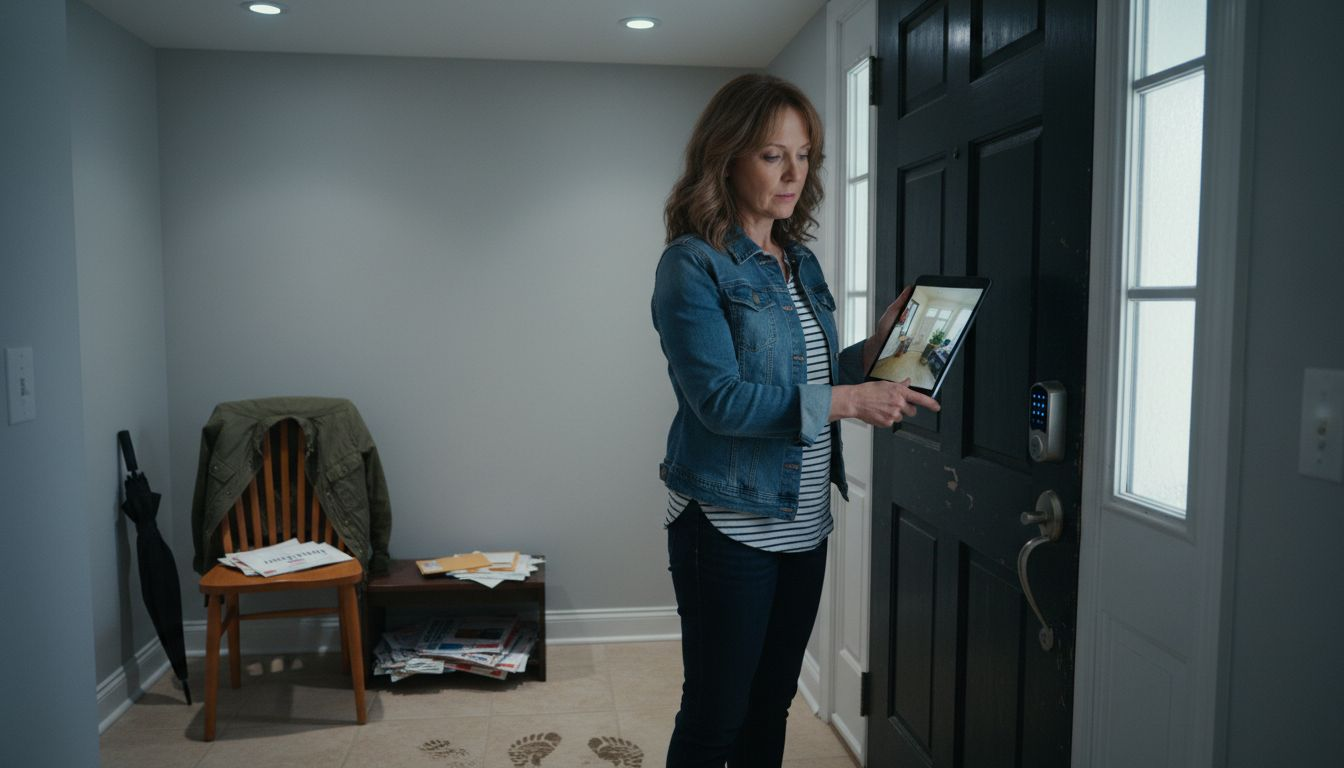
Energy management devices represent another critical category of smart home technology. Home automation systems monitor and control critical home attributes like lighting, temperature, and appliance consumption. Smart thermostats can learn household temperature preferences, automatically adjust settings for optimal comfort and efficiency, and provide detailed energy consumption reports. Smart lighting systems can be programmed to turn off automatically when rooms are unoccupied, significantly reducing unnecessary electricity usage and lowering utility costs.
Pro tip: Select smart home devices that offer compatibility with multiple communication protocols to ensure seamless integration and future expandability of your home technology ecosystem.
Here’s a comparison of the three main smart home device categories and their primary benefits:
| Category | Main Functions | Key Benefits |
|---|---|---|
| Security | Remote locks, surveillance, motion detection | Enhanced safety, peace of mind |
| Energy Management | Automated thermostats, smart lighting | Reduced costs, sustainability |
| Home Automation | Device scheduling, sensor integration | Greater convenience, flexibility |
Key Features: Connectivity, Intelligence, Compatibility
Smart home devices are distinguished by three fundamental characteristics that transform them from simple electronic gadgets to sophisticated technological ecosystems. The heterogeneous communication landscape of these technologies creates both exciting possibilities and complex integration challenges.
Connectivity represents the foundational feature enabling smart home devices to communicate and share information. This goes beyond traditional wireless networking, encompassing multiple protocols like Wi-Fi, Bluetooth, Zigbee, and 5G. Modern smart home devices can seamlessly exchange data, allowing complex interactions such as a smart thermostat communicating with window sensors to optimize temperature control or security systems synchronizing with mobile devices for real-time alerts.
Intelligence elevates smart home technology from mere remote-controlled devices to adaptive, learning systems. Home automation enables automated decision-making based on collected sensory data, machine learning algorithms, and predictive analytics. These intelligent systems can recognize patterns in household behavior, automatically adjust settings for maximum efficiency, and even anticipate user needs before they arise. An intelligent smart home system might learn your temperature preferences, work schedule, and energy consumption habits to create personalized, efficient environmental controls.
Pro tip: Prioritize smart home devices that support multiple communication protocols and offer open API integrations to maximize future compatibility and system flexibility.
Real-World Impact: Safer, Efficient Living
Smart home technologies are revolutionizing how we experience residential living, delivering tangible benefits that extend far beyond simple technological convenience. Smart buildings optimize energy consumption through sophisticated systems that transform our understanding of home efficiency and personal safety.
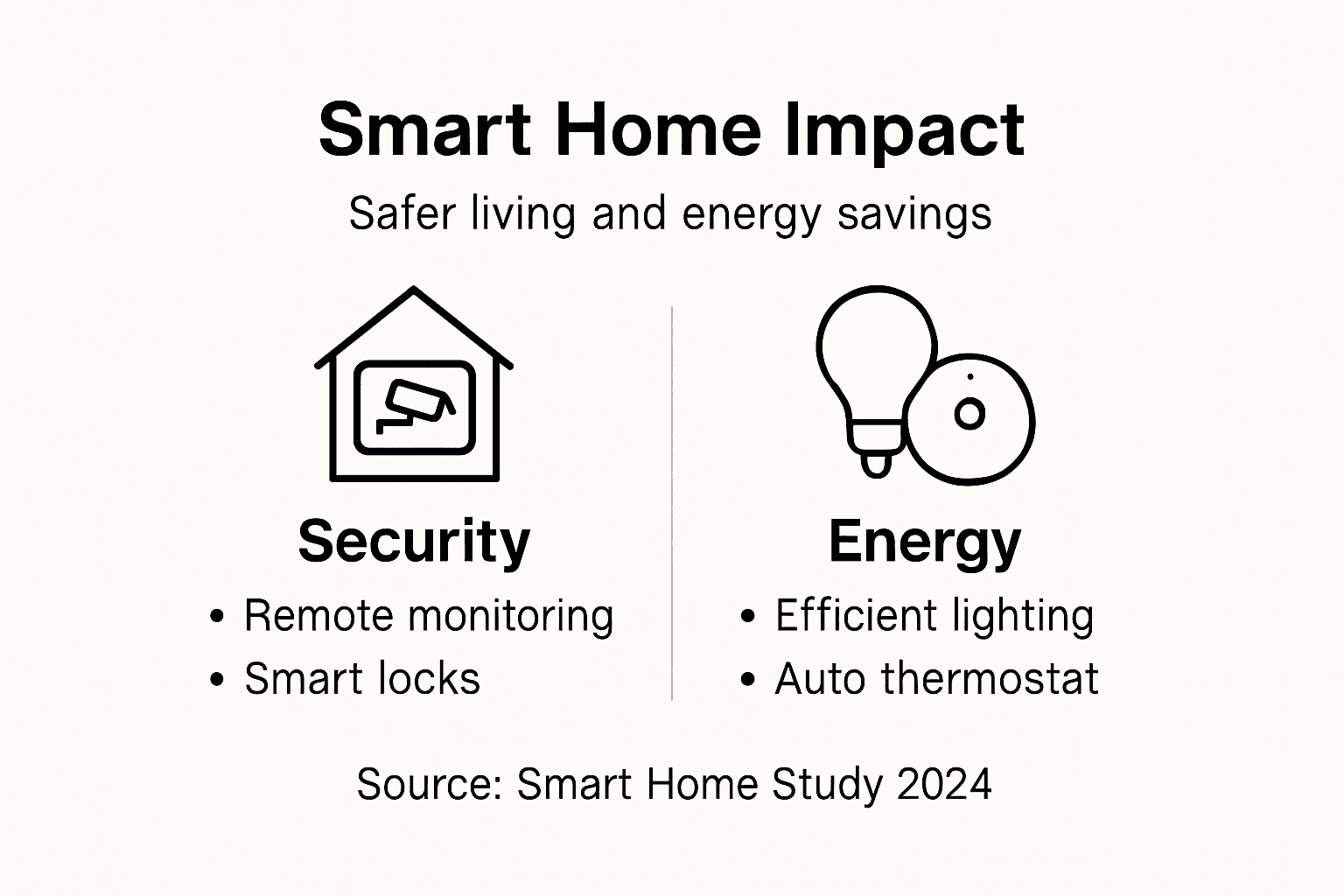
In the realm of home security, smart devices provide unprecedented levels of protection and monitoring. Advanced surveillance systems now offer real-time video streaming, motion detection with precise zone mapping, and instant mobile alerts that allow homeowners to monitor their property from anywhere in the world. Smart locks with biometric or code-based entry can track access history, send notifications about unauthorized entry attempts, and provide temporary digital keys for trusted visitors, creating a multi-layered security approach that traditional lock-and-key systems could never achieve.
Energy efficiency represents another critical dimension of smart home impact. Smart technology supports sustainability by creating intelligent environments that automatically adjust lighting, temperature, and appliance usage based on occupancy and environmental conditions. Smart thermostats can learn household patterns, reducing energy waste by automatically lowering heating or cooling when residents are away, potentially saving hundreds of dollars annually while simultaneously reducing carbon footprint. These systems go beyond simple programming, using machine learning to understand and anticipate household needs with remarkable precision.
Pro tip: Conduct a comprehensive home energy audit before implementing smart devices to identify specific areas where automation can deliver the most significant efficiency improvements.
Risks, Costs, and Privacy Challenges
Smart home technologies, while transformative, introduce complex challenges that homeowners must carefully navigate. Privacy risks in IoT devices have become increasingly sophisticated, presenting significant concerns about data collection and personal security.
The financial investment in smart home technology can be substantial, with initial setup costs ranging from several hundred to thousands of dollars. Comprehensive systems require multiple interconnected devices, professional installation, and ongoing maintenance. Homeowners must consider not just the upfront expenses, but also potential subscription fees for advanced monitoring services, cloud storage, and continued software updates. Some smart home devices become technologically obsolete within 3-5 years, necessitating additional reinvestment to maintain cutting-edge functionality.
Privacy vulnerabilities represent the most critical challenge in modern smart home ecosystems. AI-enabled devices introduce complex surveillance risks, with always-on microphones and cameras potentially capturing sensitive personal interactions. These devices can inadvertently collect detailed information about household routines, conversations, and personal habits, which might be shared with third-party vendors or vulnerable to cybersecurity breaches. The complexity of data management policies and intentionally confusing user interfaces make it difficult for average consumers to understand exactly how their personal information is being used and protected.
Pro tip: Regularly audit your smart home device permissions, disable unnecessary data collection features, and use strong, unique passwords for each connected device to minimize potential privacy risks.
The following table summarizes smart home privacy risks and effective mitigation strategies:
| Privacy Risk | Potential Threat | Mitigation Strategy |
|---|---|---|
| Data Collection | Sensitive info shared with third parties | Review permissions regularly |
| Device Surveillance | Microphones/cameras record private life | Disable unnecessary features |
| Security Breaches | Hacking of connected devices | Use strong, unique passwords |
| Policy Complexity | Confusing user agreements | Research privacy practices |
Choosing, Integrating, and Avoiding Common Pitfalls
Navigating the complex landscape of smart home technologies requires strategic planning and a comprehensive understanding of potential challenges. Interoperability challenges persist in IoT ecosystems that can undermine the effectiveness of even the most sophisticated home automation systems.
When selecting smart home devices, prioritize compatibility and scalability. Not all devices communicate seamlessly, and purchasing products from different manufacturers can create integration nightmares. Look for systems that support common communication protocols like Zigbee, Z-Wave, or Matter, which enable cross-platform functionality. Consider creating a centralized control hub that can coordinate devices from multiple brands, ensuring a more unified and responsive home automation experience.
Effective integration demands more than simply purchasing compatible devices. Smart home technology requires thoughtful design that considers both technological functionality and aesthetic coherence. Start by mapping your home’s technological ecosystem, identifying specific needs in security, energy management, and convenience. Research each device’s specific features, update frequency, and long-term support. Avoid the common pitfall of impulse purchasing by creating a comprehensive implementation strategy that allows for gradual, strategic deployment of smart technologies.
Pro tip: Create a detailed spreadsheet tracking each smart device’s communication protocol, power requirements, and potential integration points before making any purchases to ensure a smooth, compatible smart home setup.
Elevate Your Home Security and Efficiency Today
Are you ready to experience safer living and smarter energy use at home Expert smart home devices can transform your space by enhancing security through remote monitoring and automating energy management for lower bills and environmental impact. Starting with trusted technology is key and pairing these upgrades with regular home maintenance ensures the best results Explore our selection in Home Cleaning – Myzabka to keep your environment pristine and supportive of your smart home setup

Take control of your home environment now and embrace tools designed for convenience and protection Visit Myzabka to discover products that complement your smart home ambitions Shop today and start creating a living space that works harder for you with safety and savings in mind
Frequently Asked Questions
What are the main benefits of using smart home devices for security?
Smart home devices enhance security by providing features like remote access to locks, real-time surveillance, and motion detection alerts. This allows homeowners to monitor their property from anywhere and reduces the chances of unauthorized entry.
How can smart home technology improve energy efficiency?
Smart home devices can improve energy efficiency through automated temperature adjustments, lighting control, and energy consumption monitoring. For instance, smart thermostats learn user preferences and optimize heating or cooling, potentially lowering energy bills.
Can I integrate different smart home devices from various brands?
Yes, many smart home devices support common communication protocols like Zigbee or Z-Wave, making it possible to integrate devices from different manufacturers. Using a centralized control hub can enhance coordination among these devices.
What should I consider when starting my smart home journey?
It’s advisable to begin with one or two basic devices, such as a smart speaker or smart plug, to familiarize yourself with the ecosystem. Additionally, prioritize compatibility and scalability when selecting devices to ensure easy future integration.