

Smoke and strong cooking odors can linger for hours in urban Asian kitchens, making meal prep less enjoyable and sometimes even overwhelming. As more homeowners upgrade their spaces, the demand for effective kitchen exhaust fans is rising, matching trends seen in modern American homes. This guide highlights practical solutions and must-know facts, including why over 60 percent of kitchen renovations now prioritize high-performance ventilation for improved indoor air quality.
Table of Contents
- What Is A Kitchen Exhaust Fan?
- Types Of Kitchen Exhaust Fans Explained
- How Kitchen Exhaust Systems Remove Smoke And Odors
- Installation Needs And Safety Standards
- Costs, Efficiency, And Common Mistakes
Key Takeaways
| Point | Details |
|---|---|
| Importance of Kitchen Exhaust Fans | Kitchen exhaust fans are essential for removing cooking pollutants, improving indoor air quality and fire safety. |
| Types of Fans | Various fan designs cater to different kitchen layouts, including ceiling-mounted, wall-mounted, and under-cabinet options. |
| Installation and Safety Standards | Proper installation following safety standards is crucial for optimal fan performance and air quality control. |
| Cost and Efficiency Considerations | Factors such as airflow capacity, noise levels, and maintenance frequency significantly influence both cost and efficiency of exhaust fans. |
What Is a Kitchen Exhaust Fan?
A kitchen exhaust fan is a critical ventilation device designed to capture and remove cooking-generated pollutants from your indoor living space. Positioned strategically above cooktops within a hood, these systems actively pull contaminated air through specialized ductwork and expel it outside, dramatically improving your home’s air quality.
Kitchen exhaust fans function through a sophisticated mechanism that draws airborne particles like smoke, grease, heat, and odors away from your cooking area. These fans are rated for handling grease-laden air with specific safety certifications, ensuring they can manage the intense environmental conditions created during cooking. Modern kitchen exhaust systems typically offer multiple operational modes:
- Continuous operation mode
- Manual control settings
- Variable speed controls
The primary goal of a kitchen exhaust fan extends beyond simple air movement. These systems create negative pressure inside ducts, preventing polluted air from leaking back into your living space and ensuring that particulate matter does not accumulate inside the fan mechanism. Most professional-grade exhaust fans utilize two primary design approaches:
- Utility set fans: Known for high static efficiency
- Mixed flow fans: Combining benefits of axial and centrifugal fan technologies
Fire safety represents another critical function of kitchen exhaust systems. Given the potential fire hazards associated with grease-laden air, these fans play a crucial role in maintaining a safe cooking environment by quickly removing potentially combustible particles.
Pro tip: When selecting a kitchen exhaust fan, prioritize models with outside venting capabilities and UL 762 safety certification to ensure maximum performance and safety in your urban kitchen.
Types of Kitchen Exhaust Fans Explained
Kitchen exhaust fans come in multiple designs, each tailored to specific kitchen configurations and ventilation requirements. Kitchen exhaust fans include several specialized types that address unique spatial and performance needs, ensuring homeowners can find the perfect solution for their cooking space.

Ceiling-Mounted Fans offer exceptional air circulation for open kitchen layouts. These versatile systems pull air from the entire cooking area, providing quiet operation and a space-saving design ideal for kitchens without upper cabinets. Their strategic positioning allows comprehensive air movement and pollutant removal.
Wall-Mounted Fans represent another critical ventilation option. These fans are particularly efficient for smaller kitchen spaces, providing direct smoke and odor extraction above cooking surfaces. Their compact design makes them perfect for urban apartments with limited kitchen square footage.
Additional kitchen exhaust fan varieties include:
Here’s a quick comparison of kitchen exhaust fan types and their ideal usage environments:
| Fan Type | Best For | Typical Noise Level |
|---|---|---|
| Ceiling-Mounted | Open layouts, no cabinets | Quiet operation |
| Wall-Mounted | Urban apartments, small kitchens | Moderate noise |
| Under-Cabinet | Compact spaces, limited room | Low noise |
| Inline Duct Fan | Large homes, hidden installation | Very quiet |
| Exterior Wall Fan | Reducing indoor noise | Minimal noise outside |
- Under-Cabinet Fans: Compact solutions fitting beneath kitchen cabinets
- Inline Fans: Installed within ductwork, offering low noise and high efficiency
- Exterior Wall-Mounted Fans: Mounted on outside walls to minimize indoor noise
Most professional-grade exhaust fans utilize two primary technological approaches:
- Inline Centrifugal Fans: Known for smooth airflow and energy efficiency
- Direct Drive Mechanism Fans: Providing robust ventilation with minimal mechanical complexity
When selecting a kitchen exhaust fan, consider critical factors like kitchen layout, noise tolerance, airflow requirements, and maintenance preferences. Modern fans often incorporate galvanized sheet metal housing and DC motor technologies to enhance performance and durability.
Pro tip: Measure your kitchen’s precise dimensions and cooking surface area before selecting an exhaust fan to ensure optimal air circulation and maximum efficiency.
How Kitchen Exhaust Systems Remove Smoke and Odors
Kitchen exhaust systems operate through a sophisticated process of capturing and eliminating cooking pollutants directly at their source. Positioned strategically above cooking appliances, canopy hoods act as the first line of defense against smoke, grease, and odorous particles generated during meal preparation.
The mechanism begins with pollutant capture, where specialized hoods collect airborne contaminants immediately as they are produced. Powerful exhaust fans create negative pressure within the ductwork, effectively pulling contaminated air away from the cooking area and directing it outside. This process ensures that smoke, grease particles, and cooking odors are swiftly removed before they can spread throughout the living space.
Advanced kitchen exhaust systems incorporate multiple filtration technologies to enhance air quality:
- Grease Filters: Trap solid particulate matter
- Activated Carbon Filters: Neutralize odorous molecules
- UV Light Systems: Reduce grease accumulation
- Electrostatic Precipitators: Remove microscopic contaminants
Most modern systems include intelligent features like variable speed controls and environmental sensors. These technologies optimize fan function based on real-time cooking activity, ensuring maximum efficiency while minimizing unnecessary energy consumption. The sensors detect smoke density, heat levels, and particulate concentration, automatically adjusting fan speed to match cooking conditions.
The final stage of pollutant removal involves complete expulsion of contaminated air outside the building. This critical step prevents recirculation and ensures that cooking emissions are permanently removed from the indoor environment, maintaining clean and fresh kitchen air.
Pro tip: Regularly clean your exhaust fan filters and check ductwork to maintain peak performance and prevent potential fire hazards.
Installation Needs and Safety Standards
Kitchen exhaust fan installation requires precise engineering and compliance with rigorous safety standards to ensure optimal performance and home safety. Proper setup involves multiple critical considerations that go beyond simple mounting and connection.
Airflow requirements form the foundation of effective exhaust system design. Professional installations must meet specific ventilation benchmarks, typically requiring a minimum of 100 cubic feet per minute (CFM) for intermittent use or 25 CFM for continuous operation. These standards ensure sufficient air exchange and pollutant removal, with recommended targets of 5 complete air changes per hour in the cooking area.
Critical installation components include:
- Rigid Ductwork: Smooth interior surfaces for optimal airflow
- Back-Draft Dampers: Prevent external air infiltration
- Exterior Outlets: Equipped with protective louvers or screens
- Sealing Mechanisms: UL-rated tape or specialized mastic for airtight connections
OSHA ventilation standards mandate comprehensive protection protocols that extend beyond basic installation. These regulations require exhaust systems to capture and safely convey potentially harmful dusts, fumes, vapors, and gases, ensuring complete removal from work environments. Fans must maintain sufficient air velocity to transport contaminants effectively and continue operating after cooking processes to eliminate lingering pollutants.
For larger kitchen setups generating significant exhaust volumes (exceeding 400 CFM), specialized make-up air systems become mandatory. These systems maintain critical air pressure balance, preventing negative pressure that could compromise overall ventilation effectiveness and potentially impact combustion appliance performance.
Pro tip: Consult a professional HVAC technician to verify your kitchen exhaust system meets local building codes and manufacturer specifications before final installation.
Costs, Efficiency, and Common Mistakes
Kitchen exhaust fan performance reveals significant variability in real-world installation scenarios, challenging homeowners’ expectations about air quality and ventilation efficiency. Understanding the nuanced relationship between installation, maintenance, and performance is crucial for making informed purchasing decisions.
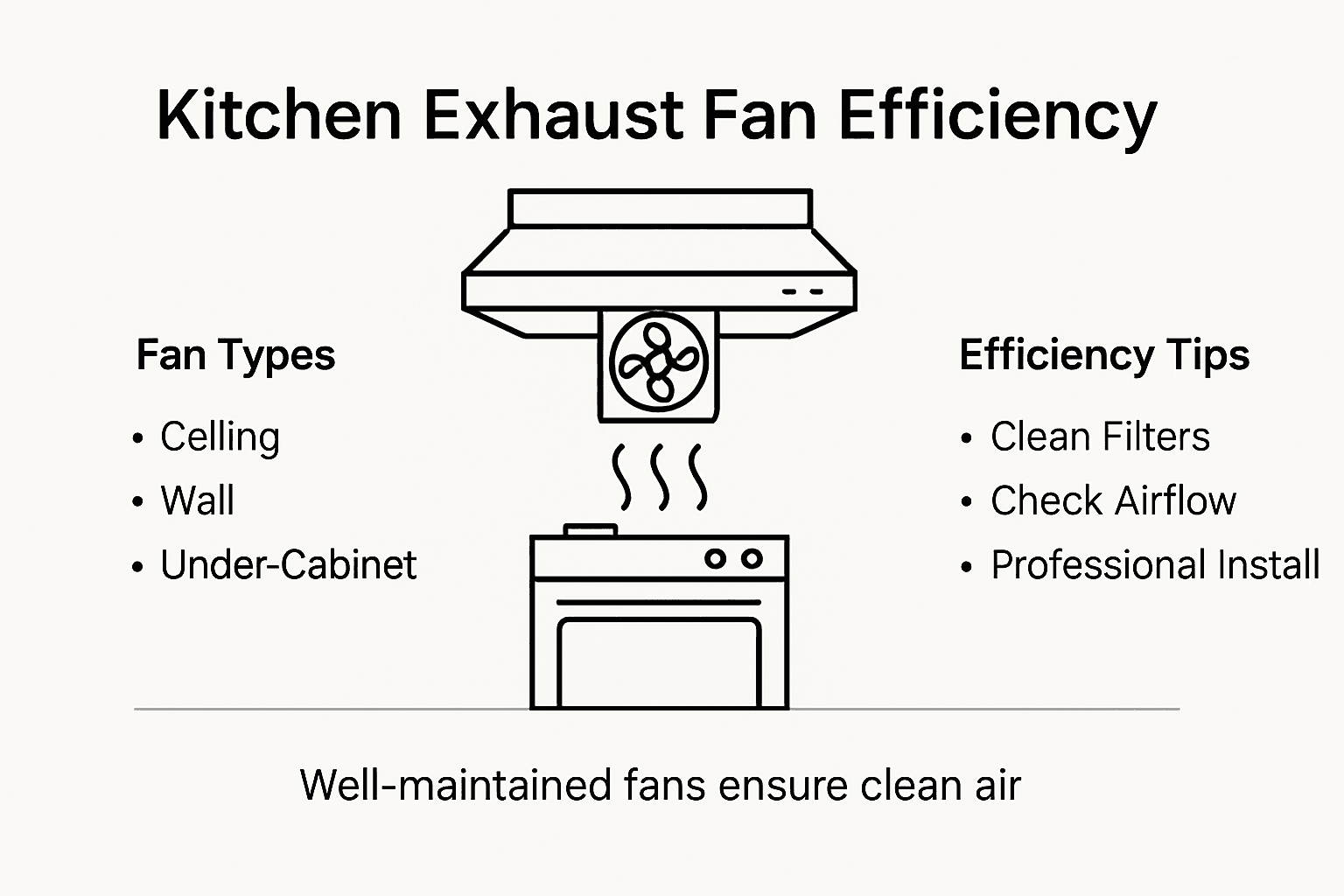
Cost considerations extend beyond the initial purchase price, encompassing long-term operational expenses and potential energy efficiency impacts. High-specification exhaust fans range from $200 to $1,500, with professional installation adding $300 to $800 to the total investment. Factors influencing pricing include airflow capacity, noise levels, technological features, and brand reputation.
Common performance issues and mistakes include:
- Low Fan Speed Operation: Dramatically reduces pollutant capture effectiveness
- Inadequate Hood Coverage: Fails to capture contaminants from all cooking surfaces
- Improper Ductwork: Reduces overall system efficiency
- Infrequent Maintenance: Leads to performance degradation
Regular maintenance is critical for sustaining exhaust fan safety and operational efficiency. Neglected systems accumulate grease, strain motors, and increase fire risks while consuming more energy. Professional maintenance helps prevent negative pressure issues, balances indoor air quality, and extends the lifespan of the ventilation system.
Efficiency metrics reveal that many exhaust fans operate significantly below manufacturer specifications. Homeowners should prioritize units with documented performance data, focusing on airflow rates, capture efficiency, and noise levels. Energy-efficient models might cost more initially but provide substantial long-term savings through reduced electricity consumption and improved air quality.
The table below summarizes major factors influencing kitchen exhaust fan costs and efficiency:
| Factor | Impact on Cost | Impact on Efficiency |
|---|---|---|
| Airflow Capacity | Higher CFM increases price | Improves pollutant removal |
| Noise Level | Quieter fans often cost more | Enhances kitchen comfort |
| Installation Quality | Professional setup adds cost | Maximizes system performance |
| Maintenance Frequency | Frequent service saves money long-term | Maintains high airflow and safety |
Pro tip: Request comprehensive performance documentation and independent testing results before purchasing a kitchen exhaust fan to ensure you’re investing in a genuinely effective system.
Elevate Your Kitchen Air Quality with Trusted Solutions
Cooking in urban homes often means dealing with smoky, greasy, or odorous air that can linger long after mealtime. This article highlights key challenges like selecting the right kitchen exhaust fan with adequate airflow capacity, ensuring proper installation, and maintaining safety standards to prevent fire hazards. If you want to avoid common pitfalls such as low fan speed operation or inadequate hood coverage, finding reliable, efficient products is essential for a fresh and safe home environment.

Discover high-performance kitchen ventilation options and home essentials at MyZabka. Every kitchen deserves airflow solutions that combine quiet operation, energy efficiency, and compliance with safety standards. Start improving your indoor air quality today by exploring our range of products designed for urban kitchens and purchase directly from MyZabka. Don’t wait until grease buildup or poor ventilation affects your comfort—take action now and breathe easier with trusted kitchen air control solutions.
Frequently Asked Questions
What is the purpose of a kitchen exhaust fan?
A kitchen exhaust fan is designed to capture and remove cooking-generated pollutants such as smoke, grease, heat, and odors from your indoor living space, significantly improving air quality.
How do kitchen exhaust fans remove smoke and odors from the kitchen?
Kitchen exhaust fans capture airborne contaminants using specialized hoods above cooking appliances. They create negative pressure in ductwork, pulling the polluted air outside to prevent the spread of smoke and odors indoors.
What types of kitchen exhaust fans are available for urban homeowners?
Various types of kitchen exhaust fans include ceiling-mounted, wall-mounted, under-cabinet, inline duct fans, and exterior wall-mounted fans, each tailored to specific kitchen configurations and performance needs.
What are important factors to consider when installing a kitchen exhaust fan?
When installing a kitchen exhaust fan, consider airflow requirements, ductwork design, noise levels, and compliance with safety standards to ensure optimal performance and safety.