

Most American households own more than they realize, yet nearly one in four admit they do not have enough storage space at home. Clutter can pile up quickly, leading to frustration and wasted time. Understanding how to assess your true storage needs can make every room feel more open and organized. This guide gives practical, smart strategies to help American families manage their belongings with less stress and more confidence.
Table of Contents
- Step 1: Assess Your Storage Needs
- Step 2: Declutter and Categorize Belongings
- Step 3: Select Suitable Home Storage Solutions
- Step 4: Implement Storage Solutions Strategically
- Step 5: Review and Optimize Your Organization
Quick Summary
| Important Insight | Explanation |
|---|---|
| 1. Assess Your Storage Needs | Conduct a detailed inventory of items you want to store to determine the space and solutions required. |
| 2. Declutter and Categorize | Sort belongings into keep, donate, or discard piles to reduce clutter and streamline storage decisions. |
| 3. Choose Suitable Storage Solutions | Select durable and functional storage containers that maximize space and enhance organization based on your needs. |
| 4. Implement Storage Solutions | Apply organizational systems in small areas first to avoid overwhelm and ensure efficient use of space. |
| 5. Review and Optimize Regularly | Periodically evaluate your storage systems and adjust them to prevent clutter and maintain functionality. |
Step 1: Assess Your Storage Needs
Before diving into organizing your home, you need a clear roadmap of your storage requirements. Performing a comprehensive inventory will help you understand exactly how much space you’ll need and what types of storage solutions will work best for your specific situation.
Start by walking through each room and making a detailed list of items you want to store. Move.org recommends creating an organized inventory that categorizes items by size, fragility, and frequency of use. Group similar items together: kitchen gadgets, seasonal clothing, hobby equipment, important documents. Measure larger items like furniture or sporting equipment to understand their spatial footprint. Pro tip: Take photos of items and note their dimensions to help visualize storage needs more accurately.
A smart strategy is to sort your belongings into three categories: keep, donate, and discard. This not only helps you understand your actual storage requirements but also reduces unnecessary clutter. By being ruthless in this initial assessment, you’ll create more efficient storage solutions and potentially free up significant space in your home. The next step will be selecting appropriate storage containers and organizational systems that match the items you’ve decided to keep.
Warning: Avoid the common mistake of underestimating your storage needs. Always add 10-15% extra space to your initial calculations to accommodate future acquisitions or items you might have forgotten.
Step 2: Declutter and Categorize Belongings
Now that you have a comprehensive inventory, it is time to transform your space by systematically decluttering and organizing your items. This crucial step will help you create a more functional and streamlined home storage system that works efficiently for your lifestyle.
Tufts Now recommends setting specific times for organization and focusing on one category at a time. Start by gathering all similar items together. Clothing in one area, kitchen tools in another, paperwork in a separate space. This method allows you to see exactly how much you own and makes decision making easier. As PBS SoCal suggests in their organizing strategies, sorting by category helps you gain a clearer understanding of your possessions.
As you sort, create three distinct piles: keep, donate, and discard. Be honest with yourself about what you truly need and use. Items that have not been used in the past year are prime candidates for donation or removal. Remember the golden rule of decluttering: if an item does not bring you joy or serve a practical purpose, it is time to let it go. Pro tip: Take photos of sentimental items you are considering discarding. This allows you to preserve memories without keeping physical clutter.
Warning: Emotional attachment can be a significant barrier to effective decluttering. Stay objective and focus on creating a space that supports your current lifestyle and future goals. Your next step will involve selecting appropriate storage solutions for the items you have decided to keep.
Step 3: Select Suitable Home Storage Solutions
With your belongings categorized, it is time to choose storage solutions that will transform your space from cluttered to organized. The right storage systems will not just hide your items but create a functional and visually appealing environment that maximizes every square inch of available space.
Habitat Lake McHenry recommends exploring vertical storage options that leverage often overlooked areas like wall spaces, high shelves, and over door storage. Think about adjustable shelving units, hanging organizers, and stackable containers that can adapt to your changing storage needs. Consider clear plastic bins for visibility or decorative baskets that complement your home aesthetic. Pay special attention to zones that typically accumulate clutter kitchen counters, entryways, and closet floors.
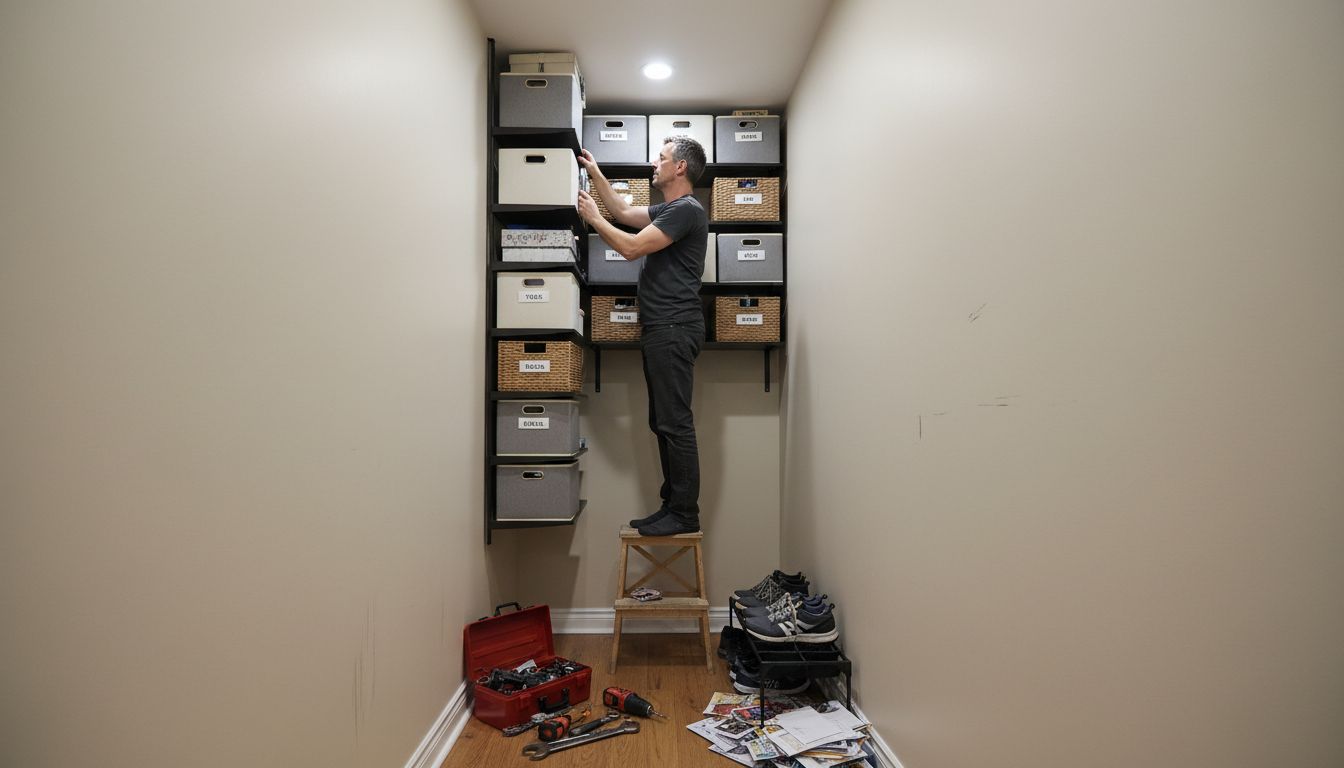
When selecting storage containers, prioritize durability and functionality. Storage association experts emphasize checking for security and quality features that protect your belongings. Look for containers with tight sealing lids, robust materials, and size options that match your specific items. Pro tip: Invest in modular storage systems that can grow or shift with your lifestyle. Measure your spaces precisely before purchasing to ensure a perfect fit.
Warning: Avoid buying storage solutions on impulse. Each container or organizational system should serve a clear purpose and integrate seamlessly with your existing space. Your next step will involve implementing these storage solutions strategically throughout your home.
Step 4: Implement Storage Solutions Strategically
With your storage containers and organizational systems selected, the real transformation begins. Strategic implementation will turn your carefully chosen solutions into a functional and efficient home organization framework that simplifies your daily life.
AARP recommends starting with small areas to build momentum and avoid feeling overwhelmed. Begin with high traffic zones like entryways, kitchen counters, and home office spaces. Habitat Lake McHenry suggests creating distinct storage zones that maximize vertical space and minimize clutter. Place frequently used items within easy reach and store seasonal or less used items in higher or more remote storage locations. Consider using labeled containers that make identification quick and simple.
Prioritize accessibility and practicality when positioning your storage solutions. Group similar items together and create intuitive systems that make sense for your specific lifestyle. For example, create a dedicated charging station for electronics, a mail sorting area near your entrance, or a cleaning supply zone in your utility space. Pro tip: Use clear containers or transparent labels to quickly identify contents without opening multiple boxes.
Warning: Resist the temptation to over organize. Your storage system should simplify your life, not create additional complexity. Maintain flexibility and be willing to adjust your organizational approach as your needs change. Your final step will involve maintaining and periodically reassessing your new storage strategy.
Step 5: Review and Optimize Your Organization
Maintaining an organized home is an ongoing process that requires periodic evaluation and adjustment. Your storage system should evolve with your lifestyle, ensuring it continues to meet your changing needs and keeps clutter at bay.
Quorum Federal Credit Union recommends creating a comprehensive home inventory as a foundational strategy for ongoing organization. Schedule a quarterly review where you photograph and document your belongings, identifying items that no longer serve a purpose. Take time to assess each storage zone critically. Are your current systems working efficiently? Do some areas feel crowded or disorganized? Be prepared to make subtle adjustments that improve functionality.

AARP suggests implementing a strict ‘one in, one out’ rule to prevent future clutter accumulation. Every time you bring a new item into your home, remove a similar item to maintain balance. Pro tip: Create a designated donation box in an accessible location to make this process seamless. Photograph and catalog items before donating to maintain a digital record of your possessions.
Warning: Do not become obsessive about perfect organization. The goal is to create a system that works for you, not to achieve impossible standards of perfection. Your storage solutions should reduce stress, not create additional anxiety about maintaining them. Embrace flexibility and remember that your home is a living space designed to support your lifestyle.
Transform Your Home with Smart Storage Solutions
Feeling overwhelmed by clutter and unsure where to start organizing your home storage? This article highlights the importance of assessing your storage needs, decluttering thoughtfully, and selecting durable, functional containers to maximize space and reduce stress. Whether it is creating vertical storage zones or labeling containers for easy access, these smart strategies can truly transform your daily living.

Take control of your home organization today by exploring our range of Home Tools designed to help you build versatile and sturdy storage systems. For kitchen-specific needs, our Kitchen Essentials make cooking spaces efficient and clutter-free. Visit Myzabka.com now and start creating an organized environment that supports your lifestyle and leaves you with a calming, spacious home. Act now to enjoy a home that truly works for you.
Frequently Asked Questions
How do I assess my storage needs at home?
Start by walking through each room and making a detailed inventory of items you want to store. Categorize items by size, fragility, and frequency of use, including dimensions for larger belongings to plan your storage better.
What is the best way to declutter my home?
Sort your belongings into three categories: keep, donate, and discard. Focus on items you haven’t used in the past year; this will help simplify your decision-making and reduce clutter significantly.
How can I choose the right storage solutions for my items?
Look for durable and functional storage options that fit your space. Consider vertical storage solutions and modular containers to maximize efficiency and adapt to your changing needs.
What should I focus on first when organizing my home?
Begin with high-traffic areas like entryways and kitchen counters to build momentum. Creating distinct storage zones for frequently used items will make your organization system more effective.
How often should I review and optimize my home storage organization?
Schedule a quarterly review of your storage solutions to assess their efficiency. Document any items that no longer serve a purpose and be ready to adjust your systems for better functionality.
What is the ‘one in, one out’ rule for maintaining organization?
Implement a ‘one in, one out’ rule to prevent clutter; for every new item you bring into your home, remove a similar item. This helps maintain balance and keeps your space organized long-term.