

Reducing kitchen waste is a growing priority for urban Asian households, with bold studies showing that energy-efficient appliances can cut electricity costs by up to 40 percent in some American cities. Finding practical, planet-friendly solutions goes far beyond choosing a few green products. If you’re tired of outdated advice and want to create a kitchen that blends sustainability with seamless function and style, this guide demystifies what an authentic eco-friendly kitchen truly means.
Table of Contents
- Eco-Friendly Kitchen Defined and Debunked
- Sustainable Materials and Design Choices
- Energy-Efficient Appliances and Water Saving
- Smart Waste Reduction and Food Management
- Costs, Benefits, and Common Pitfalls
Key Takeaways
| Point | Details |
|---|---|
| Holistic Approach to Sustainability | An eco-friendly kitchen involves strategic, incremental changes to minimize environmental impact and optimize resource usage. |
| Sustainable Materials Are Essential | Choosing renewable, durable materials and energy-efficient appliances is vital for long-term environmental responsibility. |
| Smart Waste Management Practices | Implementing meal planning and mindful food storage can significantly reduce food waste and promote sustainability. |
| Financial Impacts of Sustainability | Transitioning to eco-friendly practices can lead to long-term savings through reduced utility bills and minimized waste disposal costs. |
Eco-Friendly Kitchen Defined and Debunked
An eco-friendly kitchen transcends simple recycling or purchasing green products - it represents a holistic approach to sustainable food preparation and consumption. Sustainable kitchen practices involve strategic choices that minimize environmental impact while maximizing efficiency and resource conservation.
Contrary to popular belief, creating an eco-friendly kitchen isn’t about perfection but meaningful, incremental changes. This means understanding how everyday decisions - from ingredient sourcing to energy consumption - contribute to broader environmental sustainability. Research demonstrates that kitchen design and operational choices significantly influence ecological footprints, with advanced control schemes playing a critical role in reducing energy waste.
Key components of an authentic eco-friendly kitchen include:
- Minimizing single-use plastics
- Choosing energy-efficient appliances
- Implementing waste reduction strategies
- Selecting locally sourced, seasonal ingredients
- Practicing mindful water and energy consumption
Pro tip: Start by measuring your current kitchen’s energy consumption and set realistic sustainability goals that can be incrementally achieved over time.
Sustainable Materials and Design Choices
Creating an eco-friendly kitchen requires thoughtful selection of materials and design elements that minimize environmental impact while maximizing functionality. Green kitchen practices emphasize a holistic approach that balances environmental responsibility with aesthetic and practical considerations.
Sustainable kitchen materials go beyond simple recycling, focusing on long-term durability, renewable resources, and reduced carbon footprint. Key sustainable material choices include:
- Bamboo countertops and flooring (rapidly renewable resource)
- Recycled glass or concrete countertops
- Reclaimed wood cabinetry
- Low-VOC (volatile organic compound) paints and finishes
- Natural linoleum or cork flooring
- Recycled metal hardware and fixtures
Design choices play a crucial role in creating an eco-friendly kitchen environment. This means prioritizing energy efficiency, maximizing natural light, implementing smart storage solutions, and selecting appliances with high energy ratings. The goal is to create a space that reduces waste, conserves resources, and minimizes overall environmental impact.
Here’s a comparison of common kitchen materials and their environmental impacts:
| Material Type | Environmental Benefit | Durability Level |
|---|---|---|
| Bamboo | Rapid regrowth reduces deforestation | Moderate, best for light use |
| Recycled Glass | Diverts waste, low emissions | High, resistant to stains |
| Reclaimed Wood | Limits new timber harvesting | High, solid longevity |
| Natural Linoleum | Biodegradable and renewable | Moderate to high |
| Recycled Metal | Saves mining resources | Exceptionally durable |
Pro tip: When selecting materials, prioritize local sourcing and verify third-party sustainability certifications to ensure genuine environmental credentials.
Energy-Efficient Appliances and Water Saving
Transforming an urban kitchen into an eco-friendly space requires strategic selection of appliances that dramatically reduce energy consumption and water waste. Sustainable cooking technologies are revolutionizing how we approach kitchen efficiency, offering innovative solutions that minimize environmental impact without compromising performance.
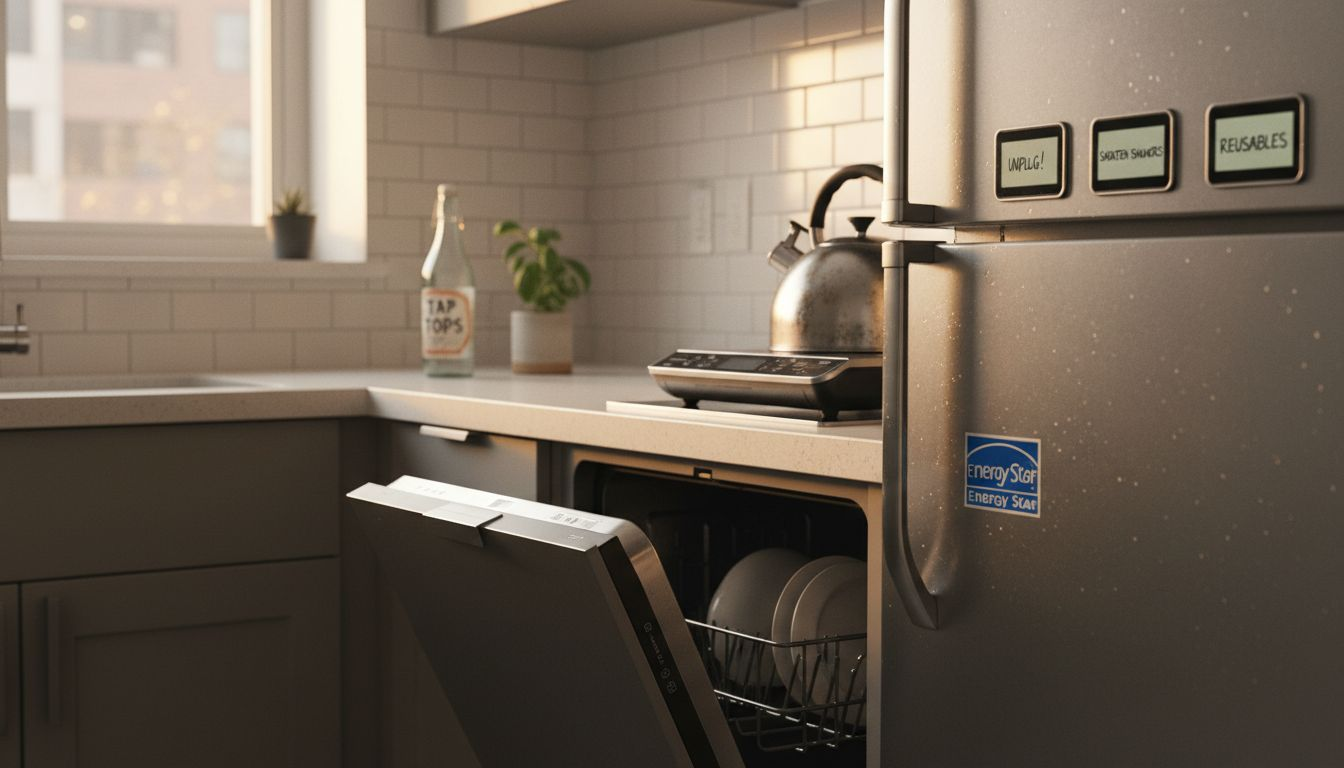
Modern energy-efficient appliances focus on multiple sustainability dimensions. Smart refrigerators with inverter compressors can reduce electricity consumption by up to 40%, while advanced dishwashers now use significantly less water per cycle. Innovative kitchen technologies are developing comprehensive approaches to optimize energy use across cooking, cleaning, and food preservation processes.
Key strategies for creating an energy-efficient kitchen include:
- Selecting appliances with Energy Star certification
- Using induction cooktops that heat more efficiently
- Investing in smart refrigerators with precise temperature controls
- Choosing front-loading washing machines
- Installing low-flow water fixtures
- Utilizing compact appliances for small kitchens to minimize overall energy consumption
Water conservation represents another critical aspect of sustainable kitchen design. Low-flow faucets, water-efficient dishwashers, and mindful usage practices can dramatically reduce household water consumption, contributing to broader environmental conservation efforts.
Pro tip: Regularly maintain your appliances and replace old models with energy-efficient versions to maximize long-term sustainability and reduce utility costs.
Smart Waste Reduction and Food Management
Sustainable kitchens demand innovative approaches to waste management that go beyond traditional recycling. Sustainable food principles reveal complex strategies for minimizing food waste and maximizing resource utilization in urban cooking environments.
Comprehensive waste reduction involves multiple interconnected strategies. Eco-friendly kitchen practices emphasize understanding the entire lifecycle of food consumption, from purchasing to disposal. This holistic approach requires intentional planning and systematic implementation of waste minimization techniques.
Key strategies for smart waste reduction include:
- Implementing precise meal planning
- Using transparent storage containers
- Practicing first-in-first-out inventory management
- Preserving vegetable scraps for stock or composting
- Freezing leftovers for future meals
- Tracking food consumption patterns
Urban kitchens can significantly reduce waste by organizing kitchen storage strategically, which helps prevent over-purchasing and spoilage. Composting, bulk buying, and mindful portioning are additional techniques that transform waste management from a challenge into an opportunity for environmental stewardship.
Pro tip: Create a weekly meal plan and inventory check to dramatically reduce food waste and optimize your kitchen’s sustainability.
Costs, Benefits, and Common Pitfalls
Sustainable kitchen practices reveal a nuanced financial landscape where initial investments can yield significant long-term economic and environmental returns. Contrary to common misconceptions, transitioning to an eco-friendly kitchen isn’t simply about spending more money, but strategically reallocating resources for maximum efficiency.
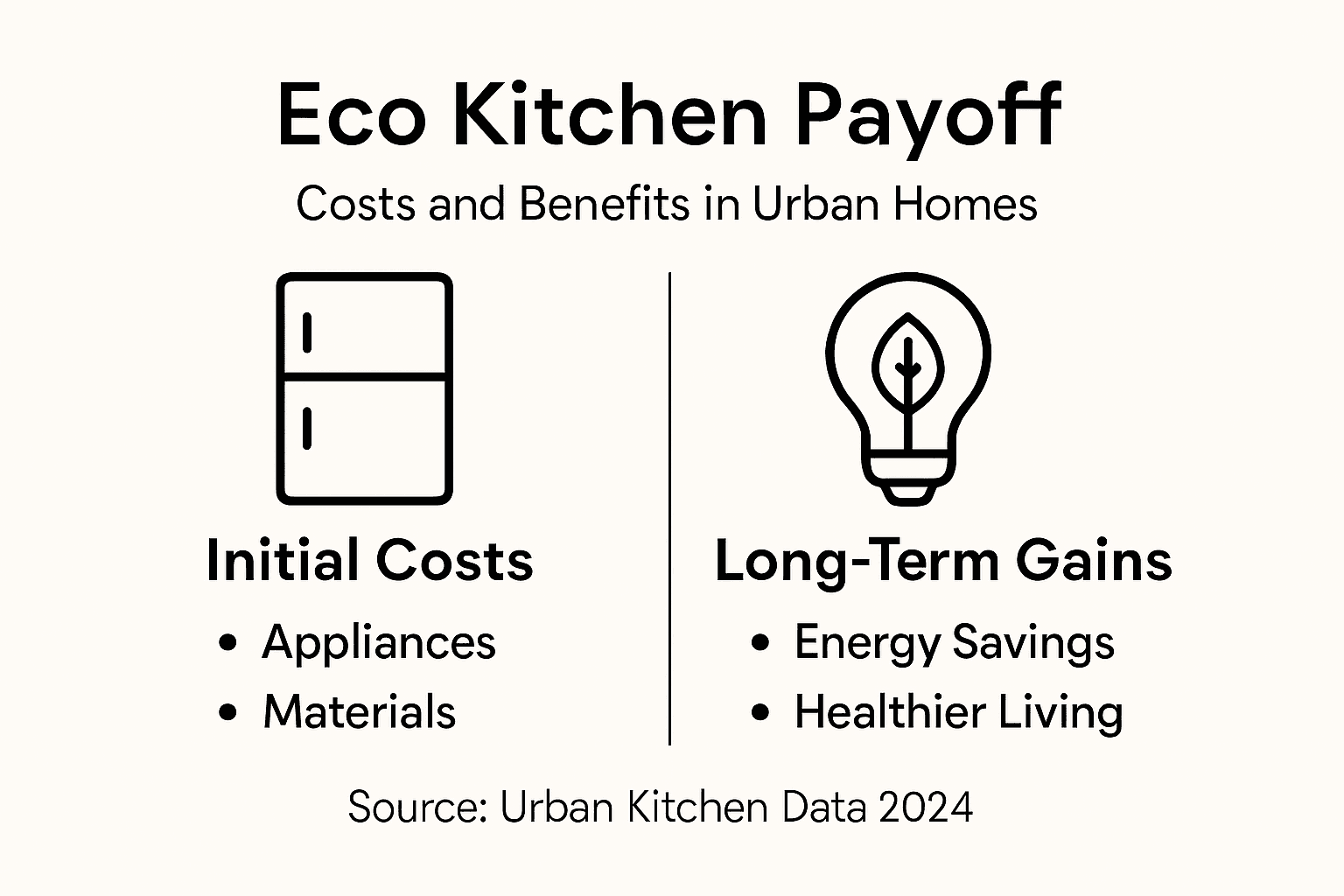
The economic calculus of sustainable kitchens extends far beyond upfront costs. Eco-friendly kitchen practices demonstrate that smart investments in energy-efficient appliances, waste reduction strategies, and mindful consumption can generate substantial savings over time. Urban homeowners can expect reduced utility bills, decreased food waste expenses, and improved overall kitchen performance.
Common pitfalls in sustainable kitchen transformation include:
- Falling for greenwashing marketing tactics
- Purchasing expensive equipment without comprehensive research
- Overlooking small behavioral changes
- Ignoring long-term maintenance costs
- Assuming sustainability means complete lifestyle overhaul
- Neglecting personalized approach to eco-friendly practices
Financial considerations are critical. While some sustainable solutions require initial investment, many strategies offer immediate cost savings. Energy-efficient appliances, reduced food waste, and mindful purchasing can offset initial expenses, creating a financially sound approach to environmental responsibility.
The following table outlines potential financial impacts of sustainable kitchen upgrades:
| Upgrade Type | Initial Cost Range | Typical Savings Timeline | Long-Term Financial Impact |
|---|---|---|---|
| Energy-efficient appliances | Moderate to High | 1-3 years | Reduces monthly utility costs |
| Water-saving fixtures | Low to Moderate | 6-18 months | Lowers water bills over time |
| Composting setup | Low | Immediate to 1 year | Reduces waste collection fees |
| Smart storage solutions | Moderate | 1-2 years | Cuts food waste, saves budget |
Pro tip: Calculate your potential savings by tracking current kitchen expenses and comparing them with projected sustainable alternatives before making significant investments.
Elevate Your Eco-Friendly Kitchen with Essential Tools and Sustainable Choices
Transforming your cooking space into an eco-friendly kitchen means overcoming challenges like minimizing energy consumption, reducing waste, and selecting sustainable materials. If you are aiming to implement smart waste reduction and choose energy-efficient appliances, starting with the right tools is key. Refresh your space with sustainable solutions that match your goals such as low-flow fixtures, smart storage options, and durable eco-friendly materials.

Discover everything you need to create a greener kitchen in our Kitchen Essentials – Myzabka collection. From compact appliances that save energy to eco-conscious kitchen organizers, you can find products designed to help you reduce waste and conserve resources effortlessly. Explore these thoughtful solutions today at Myzabka and take the first step toward a sustainable cooking experience that saves money and protects the environment. Start building your eco-friendly kitchen now and enjoy the benefits of mindful consumption and lasting efficiency.
Frequently Asked Questions
What key components should I consider for an eco-friendly kitchen?
Key components include minimizing single-use plastics, choosing energy-efficient appliances, implementing waste reduction strategies, selecting locally sourced and seasonal ingredients, and practicing mindful water and energy consumption.
How can I select sustainable materials for my kitchen renovation?
Prioritize materials like bamboo, recycled glass, reclaimed wood, and low-VOC paints. Additionally, verify third-party sustainability certifications and aim for local sourcing to minimize environmental impact.
What are the benefits of energy-efficient appliances in the kitchen?
Energy-efficient appliances can dramatically reduce electricity and water consumption, resulting in lower utility bills and a smaller environmental footprint. They often include features like smart technology that enhances efficiency while maintaining performance.
How can I effectively reduce food waste in my kitchen?
Implement meal planning, use proper inventory management, and preserve vegetable scraps for future use. Freezing leftovers and analyzing food consumption patterns can also help to minimize waste.