

Most American households spend far more on cooling than they realize, yet ceiling fans can cut energy costs by over a third compared to air conditioning. In Southeast Asia’s constant tropical heat, homeowners want relief without soaring electricity bills. Discover why ceiling fans are becoming the smart alternative to traditional cooling methods and how they deliver remarkable savings while preserving comfortable, breezy indoor environments.
Table of Contents
- Ceiling Fans As Energy-Efficient Cooling Solution
- Types And Features Of Ceiling Fans For Tropical Climates
- How Ceiling Fans Work To Enhance Comfort
- Comparing Ceiling Fans And Air Conditioning Costs
- Maximizing Savings With Hybrid Cooling Strategies
Key Takeaways
| Point | Details |
|---|---|
| Energy Efficiency | Ceiling fans significantly reduce energy consumption, operating at 15–90 watts compared to 500–5,000 watts for air conditioners. |
| Hybrid Cooling Strategies | Combining ceiling fans with air conditioning can lower energy usage by over 30% while maintaining comfort. |
| Smart Technology Integration | Advanced ceiling fans with IoT can optimize air circulation based on real-time environmental conditions, enhancing comfort and efficiency. |
| Cooling Techniques | Ceiling fans create a wind chill effect, allowing occupants to feel cooler without lowering room temperature, thus saving on energy costs. |
Ceiling fans as energy-efficient cooling solution
Ceiling fans represent a strategic, cost-effective cooling solution for tropical homes, offering substantial energy savings compared to traditional air conditioning systems. Recent research investigating energy consumption in residential buildings confirms their potential to dramatically reduce electricity usage while maintaining comfortable indoor temperatures.
The efficiency of ceiling fans stems from their ability to create significant air movement without consuming excessive electricity. Unlike air conditioning units that require substantial power to cool entire spaces, ceiling fans work by generating wind chill effect, making occupants feel several degrees cooler through continuous air circulation. Studies have demonstrated that coordinated fan and air conditioning strategies can reduce compressor energy consumption by an average of 36%, making them an intelligent choice for homeowners seeking to minimize their energy expenses.
In tropical environments like Southeast Asia, where heat and humidity are persistent challenges, ceiling fans provide multiple advantages. They operate at a fraction of the energy cost of air conditioners, create consistent air movement that prevents moisture buildup, and can be used effectively in conjunction with other cooling methods. The low power consumption combined with their cooling performance makes ceiling fans an essential component of energy-efficient home design.
Pro tip: Select ceiling fans with DC motor technology, which consume up to 70% less electricity compared to traditional AC motor fans, maximizing your energy savings.
Types and features of ceiling fans for tropical climates
Ceiling fans designed for tropical climates feature specialized characteristics that address the unique environmental challenges of high heat and humidity. Research in tropical settings like Singapore demonstrates that these fans significantly enhance thermal comfort by creating strategic air movement, making indoor spaces more bearable during intense heat waves.
The most effective ceiling fans for tropical environments typically include several key design features. Blade design plays a critical role, with wider blades providing more air circulation and longer blade spans covering larger room areas. Speed control mechanisms are essential, allowing users to adjust airflow intensity based on temperature and personal comfort. Additionally, advanced ceiling fan systems integrated with air conditioning can optimize cooling strategies, reducing overall energy consumption, making them a smart investment for homeowners.
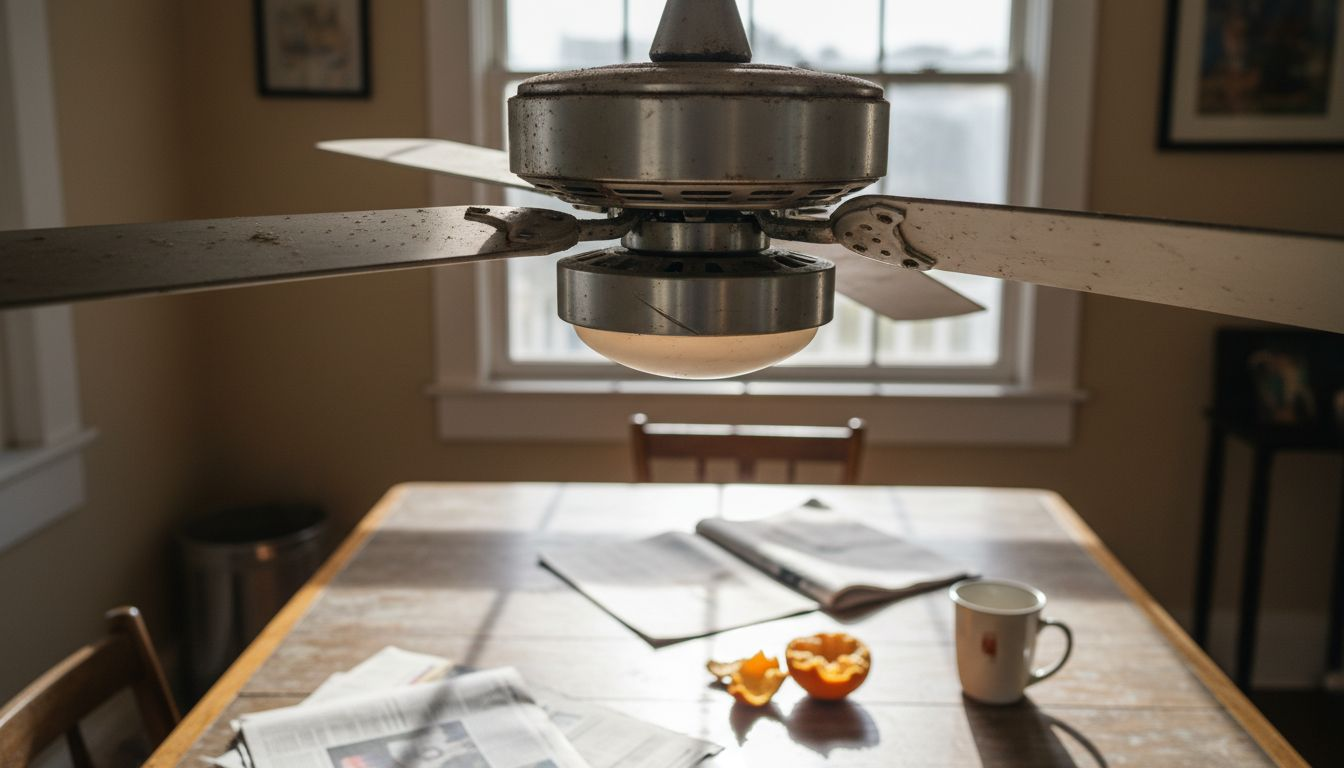
Material selection is another crucial factor for tropical ceiling fans. Rust-resistant materials like marine-grade aluminum or treated stainless steel prevent corrosion from high humidity, while lightweight materials ensure efficient operation. Modern ceiling fans also incorporate additional features such as reversible blade rotation, allowing warm air circulation during cooler months, remote control functionality, and energy-efficient DC motor technology.
Pro tip: When selecting a ceiling fan for tropical homes, prioritize models with at least 52-inch blade spans and multiple speed settings to maximize cooling effectiveness and air circulation.
How ceiling fans work to enhance comfort
Cutting-edge research on thermal comfort technologies reveals that ceiling fans function through a sophisticated mechanism of air movement that significantly improves human comfort. Unlike air conditioning systems that actively reduce temperature, ceiling fans create a cooling effect by generating air circulation that accelerates sweat evaporation from the skin, making occupants feel several degrees cooler without actually lowering room temperature.
The scientific principle behind ceiling fan comfort is known as the wind chill effect. Studies from New Delhi demonstrate that fans can extend the thermal comfort zone by approximately 2.5°C, allowing residents to feel comfortable at higher ambient temperatures. By generating a gentle airflow of around 0.2 meters per second, ceiling fans trigger the body’s natural cooling mechanism, reducing physiological heat stress and improving overall thermal perception.
Modern ceiling fans have evolved beyond simple air movement, incorporating advanced technologies that optimize comfort and energy efficiency. Smart ceiling fans now integrate artificial intelligence and Internet of Things (IoT) sensors that can automatically adjust fan speed based on room occupancy, temperature, and humidity levels. These intelligent systems continuously monitor environmental conditions, ensuring optimal air circulation while minimizing energy consumption and maintaining consistent comfort levels.
Pro tip: Position your ceiling fan to rotate counterclockwise during hot months to create a direct downward breeze that maximizes the cooling effect on human skin.
Comparing ceiling fans and air conditioning costs
Comprehensive energy consumption studies reveal a striking difference in power usage between ceiling fans and traditional air conditioning systems. While air conditioners typically consume between 500 to 5,000 watts, ceiling fans operate at a dramatically lower range of just 15 to 90 watts, representing an enormous potential for energy savings in tropical homes.
The financial implications of this energy difference are significant. Field research in California demonstrates that strategic fan usage can reduce cooling season energy costs by over one-third, making ceiling fans an economically smart cooling solution. By allowing homeowners to raise air conditioning set-point temperatures and using fans to enhance comfort, households can achieve substantial electricity bill reductions. Inverter air conditioners paired with ceiling fans offer even more advanced energy-saving potential, creating a synergistic cooling approach that minimizes electricity consumption.
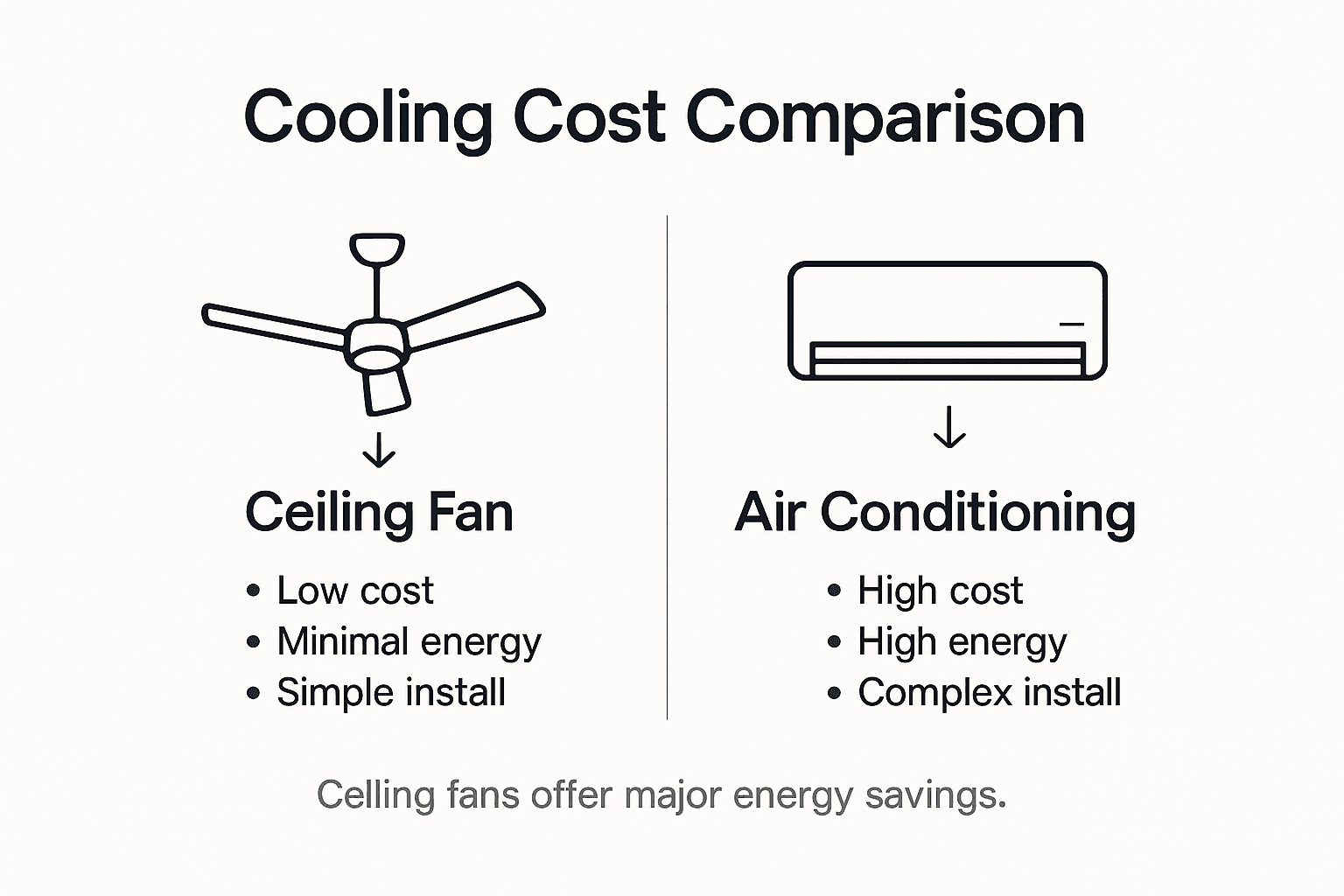
Beyond raw energy costs, ceiling fans provide additional economic advantages. Their lower initial purchase price, minimal maintenance requirements, and extended operational lifespan make them a cost-effective alternative to constantly running air conditioning units. The ability to create a cooling sensation without actually lowering room temperature means homeowners can significantly reduce their overall cooling expenses while maintaining comfortable indoor environments.
Here is a concise comparison of ceiling fans and air conditioning systems in tropical homes:
| Aspect | Ceiling Fans | Air Conditioning |
|---|---|---|
| Power Consumption | 15–90 watts | 500–5,000 watts |
| Installation Cost | Low, budget-friendly | High, requires expertise |
| Maintenance | Minimal, easy upkeep | Frequent, costly parts |
| Cooling Mechanism | Air movement & wind chill | Reduces room temperature |
| Typical Lifespan | 10–15 years | 7–10 years |
Pro tip: Install a programmable thermostat alongside your ceiling fans to automatically optimize temperature settings and maximize energy savings during peak cooling hours.
Maximizing savings with hybrid cooling strategies
Groundbreaking research from UC Berkeley and Singaporean partners reveals a compelling approach to energy efficiency in tropical environments: hybrid cooling strategies that combine ceiling fans with air conditioning. By strategically integrating these cooling methods, homeowners can reduce energy consumption by more than 30% without sacrificing personal comfort.
Hybrid cooling fundamentally works by allowing air conditioning units to operate at higher temperature settings while ceiling fans create additional cooling sensation. This approach leverages the low power consumption of fans to offset the high energy demands of traditional air conditioning. Comprehensive reviews of ventilation systems highlight the critical importance of smart control strategies in maximizing the performance of hybrid cooling approaches, emphasizing the need for intelligent integration of mechanical and natural cooling methods.
The economic and environmental benefits of hybrid cooling extend beyond immediate energy savings. By reducing overall electricity consumption, homeowners can significantly lower their carbon footprint while maintaining comfortable indoor temperatures. Smart home technologies now enable precise control and automation of these hybrid systems, allowing for real-time adjustments based on occupancy, humidity levels, and individual comfort preferences.
Below is a summary of hybrid cooling strategies and their key advantages:
| Strategy | Energy Savings | Comfort Impact |
|---|---|---|
| Fans Only | Up to 90% vs AC alone | Good in moderate climates |
| AC Only | Higher energy usage | Maximum cooling, high cost |
| Hybrid (Fan + AC) | 30–40% vs AC alone | Excellent with smart controls |
| Smart Hybrid Systems | Highest optimization | Automatically adjusts settings |
Pro tip: Install smart sensors that automatically coordinate your ceiling fan and air conditioning system to optimize energy usage and maintain consistent comfort levels throughout the day.
Discover Energy-Saving Comfort with Smart Home Solutions
Are you ready to transform your tropical home into a cool and energy-efficient sanctuary? The key challenge many homeowners face is balancing comfort with soaring energy costs. This article highlights how ceiling fans offer a powerful and affordable way to maintain ideal indoor temperatures through the wind chill effect while slashing electricity consumption. By choosing fans with features like DC motors, wide blades, and smart controls you can maximize airflow and reduce your cooling bills without compromising comfort.

Explore a wide selection of high-quality ceiling fans and home cooling products at myzabka.com. Take advantage of hybrid cooling strategies by pairing ceiling fans with smart thermostats available in our store to optimize your energy savings and comfort automatically. Don’t wait for another expensive cooling bill. Visit Home and Kitchen products to find affordable solutions designed for tropical climates and start experiencing cooler air and greater savings today.
Frequently Asked Questions
What are the energy-saving benefits of using ceiling fans?
Ceiling fans are highly energy-efficient, typically consuming only 15 to 90 watts compared to air conditioning units, which consume 500 to 5,000 watts. This significant reduction in power usage leads to lower electricity bills while maintaining comfortable indoor temperatures through effective air circulation.
How do ceiling fans enhance comfort in tropical climates?
Ceiling fans create a wind chill effect that accelerates sweat evaporation, making occupants feel cooler without actually lowering the room temperature. This allows for a comfortable environment even during high heat and humidity conditions.
Can ceiling fans help reduce air conditioning costs?
Yes, by using ceiling fans in conjunction with air conditioning, homeowners can increase the AC’s set-point temperature, allowing for lower energy consumption. Studies indicate that using both methods can reduce compressor energy use by about 36%, leading to significant cost savings.
What features should I look for in ceiling fans for tropical climates?
When choosing ceiling fans for tropical climates, prioritize models with wider blades (at least 52 inches), multiple speed settings, and rust-resistant materials. Consider fans with DC motor technology for maximum energy efficiency and models that allow reversible blade rotation for seasonal adjustments.